
REVIEW · FRANCE
Champagne Vineyard Experience: Delve into the terroir
Champagne makes more sense from the soil up. This 90-minute visit at Champagne Harlin Père & Fils connects the family’s oldest vines with its historic cellar, then brings the lesson together over a tasting. I especially like the terroir-first approach, and I like that the visit includes Ratafia Champenois as well as Champagne. The main consideration is that the tasting comes after a short vineyard walk and some cellar stairs, so this is not a sit-down tasting only.
The visit costs $28 per person, a fair price if you want a small producer’s view of Champagne rather than a polished cellar attraction. The experience is offered in English or French, and guides such as Sarah and Chléo have been praised for clear explanations and warm, attentive hosting. One caution: if you expect a large lineup of wines or an elaborate production show, the selection may feel modest.
Key points at a glance
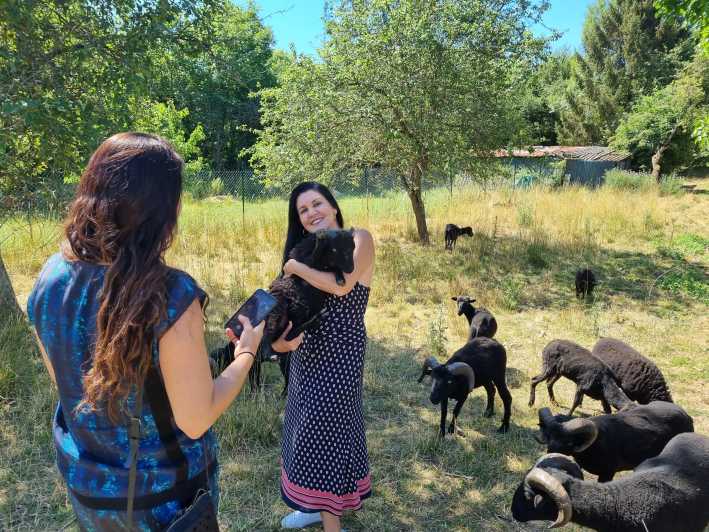
- Old vines in the family garden: Start near the vines planted by the producer’s grandfather, a personal touch that gives the visit a sense of place.
- Soil shapes the Champagne: Learn how the terroirs of Mareuil-le-Port, Épernay, and Tours-sur-Marne influence different cuvées.
- Historic cellar visit: Walk below the house to see where Champagne production is explained in practical, accessible terms.
- Two kinds of tasting: Sample Champagne and the house’s Ratafia Champenois, a regional fortified wine.
- Biodiversity matters here: The family talks about organic and sustainable viticulture, not just finished bottles.
- Plan for stairs: A vineyard stroll and cellar steps are part of the experience, so wear sensible shoes.
Starting in the courtyard at 8 Rue de la Fontaine
Your visit begins in the courtyard of Champagne Harlin Père & Fils at 8 Rue de la Fontaine. The setting is personal from the start. Rather than meeting at a large visitor center, you enter the family property and wait for your guide in the courtyard. If the guide is not immediately there, the host is expected to greet you shortly.
That small arrival detail matters. You are not being processed through a large commercial operation. You are meeting the people behind the bottles, in the place where the family works and welcomes visitors.
The tour is available in English and French, which makes it useful for international visitors who want more than a quick tasting-room explanation. The strongest guide feedback has centered on Sarah and Chléo, both praised for clear explanations, enthusiasm, patience, and a friendly manner. If your group happens to be led by one of them, you can expect the visit to feel conversational rather than memorized.
The courtyard is also a good place to settle into the pace. This is a compact experience, not a full-day vineyard outing. You will spend about 90 minutes moving between the vines, cellar, and tasting area, all at the same address.
More Champagne house tours around France:
- Epernay: Jeep tour of the vineyards with tasting and visits
★ 5.0 · 70 reviews - Gourmet walk in the heart of the vineyards with Champagne tasting near Epernay
★ 5.0 · 45 reviews - Champagne tasting, panoramic walk in the vineyards
★ 5.0 · 42 reviews
The grandfather’s vines and the meaning of terroir
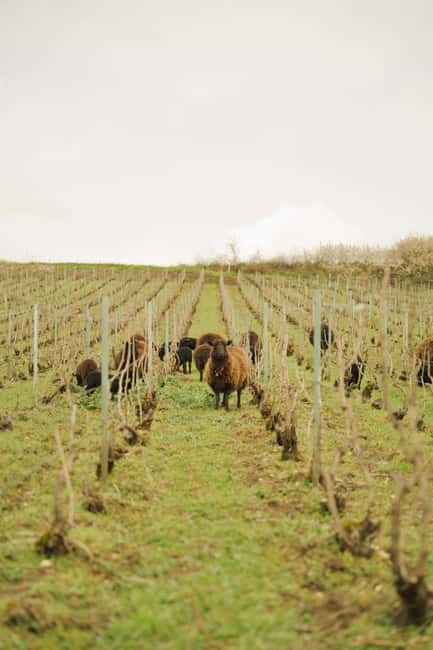
The first part of the visit takes you toward the garden and the estate’s oldest vines. These are described as vines planted by the grandfather, which gives the tour an appealing family thread. You are not starting with an abstract lesson about Champagne. You are starting with living plants connected to the producer’s own story.
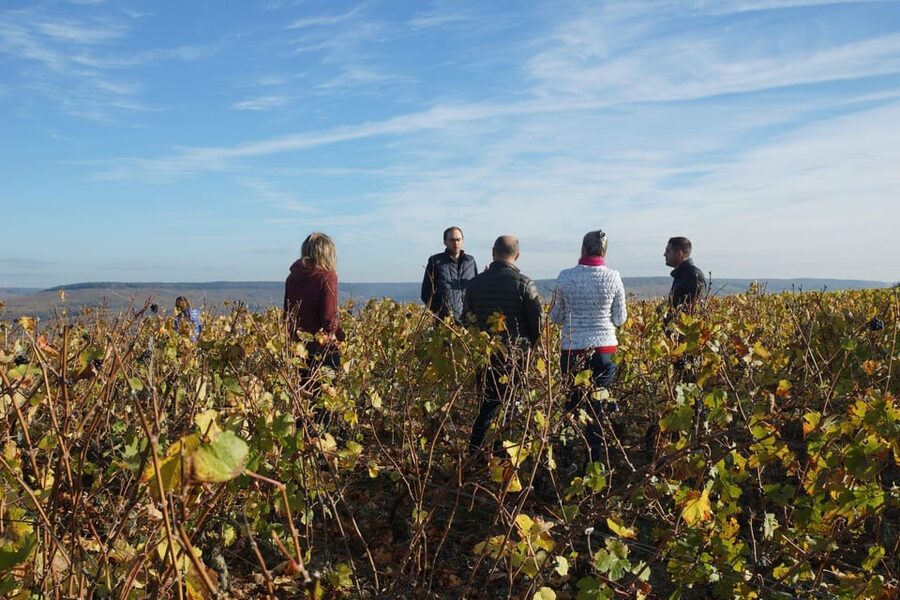
The vineyard walk is short, but it is important. Champagne can seem like a luxury product defined by labels, celebrations, and price tags. Here, the guide shifts your attention to the soil, exposure, vines, and farming choices that come before fermentation and aging.
The family’s focus on organic and sustainable viticulture gives this section more weight. You learn how biodiversity preservation fits into the work of a Champagne producer and how the health of the vineyard affects the fruit. The experience does not present sustainability as a separate slogan. It links the condition of the vines to the character of the wine in your glass.
You will also hear about the estate’s connection to three areas: Mareuil-le-Port, Épernay, and Tours-sur-Marne. The point is not simply to memorize three place names. It is to understand that Champagne is not one uniform growing area. Differences in soil and site can help shape separate cuvées, even when the broader region shares the same winemaking identity.
I find this part particularly useful for first-time Champagne visitors. It gives you a way to taste with more attention later. Instead of asking only if you like a bottle, you can start asking what kind of fruit, texture, freshness, and structure the producer is trying to express.
The walk does have a practical limit. You will be outside for only part of the experience, and the supplied details do not promise a long trek through many parcels. Think of it as a focused vineyard introduction, not a countryside hike. Comfortable shoes still make sense, especially because the tour continues below ground.
Down into the historic cellar
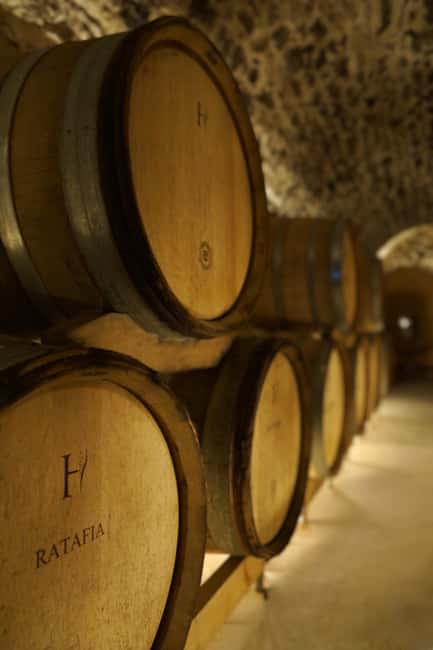
From the vines, the visit moves into the historic cellar. This is where the tour shifts from farming to production, showing how harvested grapes become Champagne. The cellar is described as cool, so you may want a light layer even if the weather outside is warm.
The cellar section lasts long enough to explain the main stages of Champagne production without turning the visit into a technical course. Your guide discusses the methods and choices behind the bottles, including the secrets of production that a casual tasting often skips.
This is also where the family setting helps. At a large Champagne house, production can feel distant from the person pouring your glass. At Champagne Harlin Père & Fils, the cellar is part of the same family operation as the vineyard. You can connect the old vines upstairs with the bottles being explained below.
The cellar may be less suitable for anyone who dislikes stairs or uneven movement through older spaces. One detailed account of the visit specifically notes a small walk in the vines and several stairs for the cellars and tasting room. The information does not indicate that the route is step-free, so keep that in mind before booking.
For most people, the change in temperature and setting adds to the sense of place. Champagne is not made only in a sunny vineyard. Much of its identity develops through time, patience, and storage in cool cellar conditions. Even a short visit below ground helps make that process more tangible.
A tasting that includes Ratafia Champenois
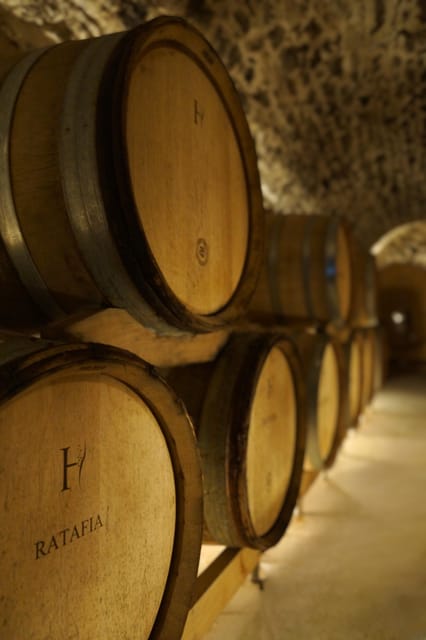
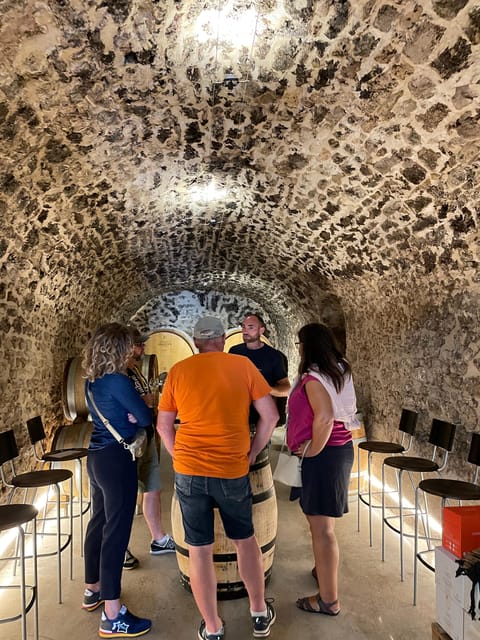
The final part of the visit is the tasting, with about 30 minutes set aside for Champagne, wine, and Ratafia Champenois. The tasting gives you a chance to connect the earlier discussion of soils and production with actual flavors.
Ratafia Champenois is an especially welcome inclusion. It is not as familiar to many international visitors as Champagne, so sampling it adds something beyond the usual sparkling-wine routine. It also shows that the estate’s identity is not limited to one product.
Your guide explains how to taste, helping you pay attention to the wine rather than simply taking a sip and deciding if it is pleasant. That makes the tasting more useful for beginners. You do not need an advanced vocabulary. You only need to notice what changes from one glass to the next and how the guide links those differences to the estate’s vineyards and production choices.
The tasting appears designed to be focused rather than lavish. That is important when judging the price. At $28, you are paying for a guided visit, a family producer’s story, a vineyard and cellar tour, and the chance to taste both Champagne and Ratafia Champenois. You are not paying for a long tasting flight or a full meal.
One visitor gave the experience a poor value assessment, describing the Champagne as too expensive for what was offered and feeling that the presentation was staged. I would take that as a useful warning rather than ignore it. The experience suits you best if you value personal explanation, farming practices, and a direct connection with a small producer. If your top priority is the number of pours or the amount of wine, you may want to compare this with a larger tasting program.
The overall rating of 4.4 from 52 ratings suggests that the experience works very well for many people, but it is not universally loved. That balance fits the format: the strength is the human guide and the connection between vineyard, cellar, and bottle. The possible weakness is that the tasting may feel too limited for someone focused mainly on quantity.
A few more vineyard visits around France worth a look
- Saint-Émilion: Grand Cru Classé Winery Visit and Tasting
★ 4.6 · 1,118 reviews - Saint Emilion Half-Day Trip with Wine Tasting & Winery Visit from Bordeaux
★ 4.5 · 1,034 reviews - Saint-Émilion: Bordeaux Vineyard Tour and Wine Tasting
★ 4.8 · 578 reviews - Bordeaux: Vineyards Wine Tasting Half-Day Trip
★ 4.2 · 470 reviews
What the guides do best
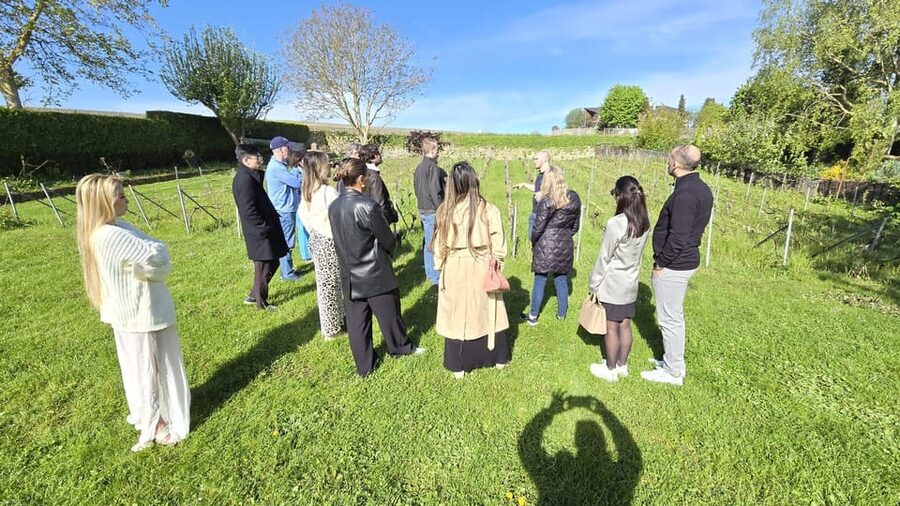
The guide can make or break a short wine visit. Ninety minutes leaves little room for a dull introduction or unclear explanations. The strongest accounts of this experience point to guides who are enthusiastic, generous with information, and willing to answer questions.
Sarah has been singled out for clear explanations of Champagne production. Chléo has also been praised for her information and kindness. A visit led by either guide may feel almost private if the group is small, though group size can vary and should not be assumed.
That personal style is one of the experience’s main attractions. The guide is not just pointing out equipment. The guide is explaining how a family company manages vines, thinks about biodiversity, and expresses several terroirs through its cuvées.
I would still keep expectations sensible. A good guide cannot turn 90 minutes into a complete education in Champagne. You will receive an approachable introduction, not a detailed master class covering every grape, vintage, and production decision. For a first visit, that is often the right amount.
The tour has also been described as varied and captivating, which makes sense given the movement from courtyard to vines, cellar, and tasting room. You are not sitting in one place for the whole appointment. That change of scene helps the information stick.
How the timing works
The advertised duration is 90 minutes. The detailed schedule breaks the experience into roughly 45 minutes for the guided portion, one hour for the visit, and 30 minutes for the tasting, so the timing shown in the booking information is not perfectly consistent. I would plan on about an hour and a half overall and confirm the exact starting time when you book.
The tour begins and ends at 8 Rue de la Fontaine. There is no separate transfer between the vineyard, cellar, and tasting room. That makes the experience easy to fit into a day in the Champagne area, especially if you are already near the property.
The compact format is useful if you want to leave room for another cellar, a meal, or time in a nearby town. It also means the tour moves at a steady pace. If you like lingering over every glass, asking many technical questions, or taking extensive photographs, you may need to keep an eye on the clock.
The experience is family-friendly in one important way. Children under 18 may join without a ticket and can be offered fruit juice, but French law means they cannot drink alcohol. This lets families visit together without treating the tasting as an adults-only activity.
Practical value at $28 per person
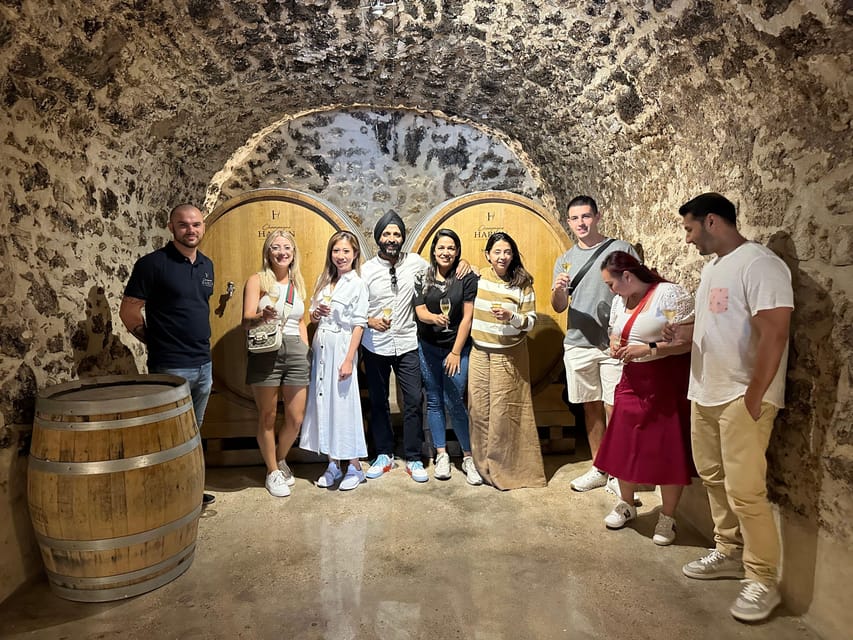
At $28, the price sits in a reasonable range for a guided Champagne producer visit, provided you want the full story rather than just a pour. The included ticket, guide, and tasting cover the main parts of the experience. You also receive context about vineyard care and biodiversity, which is increasingly useful when comparing producers.
The value is strongest for three types of visitors:
- You are visiting Champagne for the first time and want a clear introduction.
- You prefer family-run producers to large, highly packaged attractions.
- You care about farming, soil, and sustainability as much as the final drink.
The value is less certain if you already know Champagne production well or mainly want a large tasting selection. The visit is built around explanation and connection, not volume.
I also like that you can reserve now and pay later, which helps if your route is still changing. Cancellation is free up to 24 hours in advance for a full refund. Keep those terms in mind when arranging several cellar visits, since plans in the Champagne region can easily become overpacked.
Alcohol and drugs are not allowed beyond the planned tasting context. Children can attend, but they receive juice rather than Champagne. Those rules are simple, and the family-friendly approach is clear.
Who should book this Champagne visit?
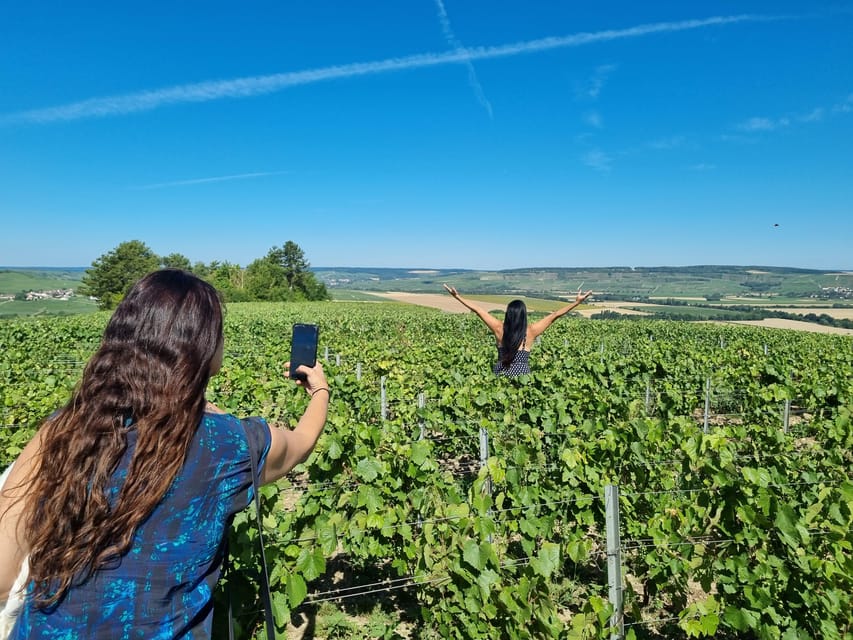
I would recommend it to anyone who wants to understand how a Champagne producer works from vine to bottle. The visit is especially good for first-time visitors who want a small-scale family setting, a short vineyard walk, and a cellar explanation before tasting.
It is also a good choice if you enjoy meeting producers who talk about biodiversity in practical terms. The focus on the grandfather’s old vines and the three named terroirs gives the experience more personality than a generic tasting room appointment.
You may want to skip it if stairs are a serious problem, if you need a fully step-free route, or if you expect a long tasting with many wines. The visit includes cellar and tasting-room stairs, and the tasting is presented as a 30-minute finish rather than the main event.
My advice is to arrive ready to listen, wear shoes suited to a short vineyard walk, and leave room for questions. Ask how the three terroirs affect the cuvées, and ask about the family’s biodiversity work. Those subjects are where this experience offers its most useful insight.
Should you book Champagne Harlin Père & Fils?
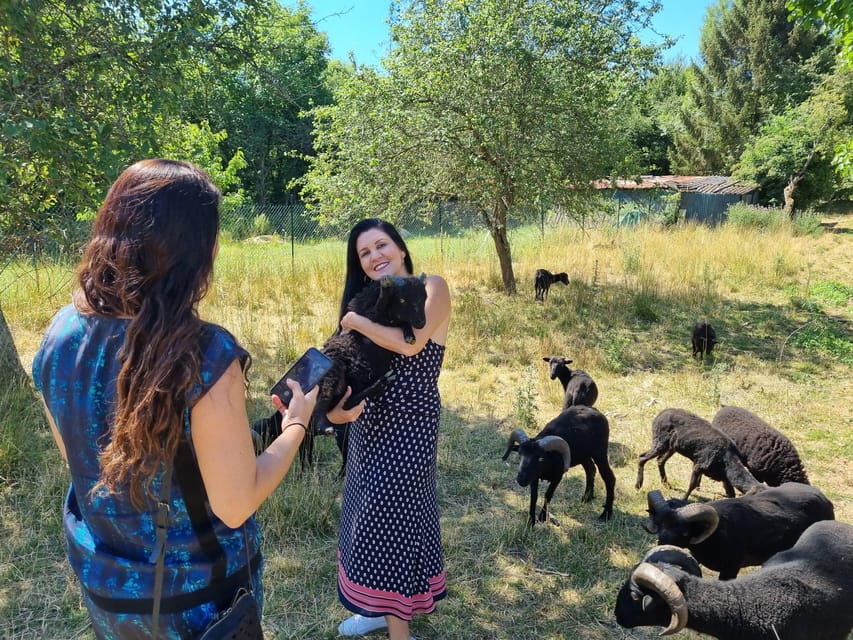
Yes, if you want a friendly, grounded introduction to Champagne with a real link between old vines, cellar work, and tasting. The $28 price is fair for the guided experience, especially when the visit is led by an engaging guide such as Sarah or Chléo.
Book with realistic expectations. You will get about 90 minutes, a modest tasting, a vineyard walk, cellar stairs, and a family producer’s explanation of terroir and sustainable farming. You will not get a grand production spectacle or a huge lineup of bottles. For many people, that is exactly the point.
FAQ
Where does the Champagne vineyard experience take place?
It takes place at Champagne Harlin Père & Fils, 8 Rue de la Fontaine, in the Grand Est region of France. The visit begins and ends at this address.
How long does the experience last?
The advertised duration is 90 minutes. It includes time in the vines, a cellar visit, and a tasting.
What languages are available?
The tour is offered in English and French.
What is included in the price?
The price includes the entrance ticket, a guide, and the tasting.
What will I taste?
The tasting includes Champagne and Ratafia Champenois. Wine tasting is also included in the scheduled tasting portion.
Can children attend?
Yes. Children under 18 may accompany adults without needing a ticket. They cannot drink alcohol under French law, and fruit juice can be provided.
Can I cancel or pay later?
You can reserve and pay later, so you do not have to pay at the time of booking. Cancellation is allowed up to 24 hours in advance for a full refund.
Just added around France
- Vineyard of the Alpilles by bike★ 4.6 · 8 reviews
- Vosne-Romanée: Private Vineyards Walking Tour with Tasting★ 4.4 · 9 reviews
- Vineyard tour and wine tasting in Davron★ 4.5 · 7 reviews
- Private Vineyard Tour and Wine Tasting in Bandol★ 5.0 · 16 reviews
- Vineyard visit in Gyropode, visit of Cave & Tasting Wines of Bandol★ 5.0 · 19 reviews
- Bike ride on the Wine Route from Sélestat★ 5.0 · 5 reviews
- Horse riding in the vineyards of Grimaud + wine tasting★ 5.0 · 3 reviews
- 1/2 day private Vintage tour, vineyards of Saint-Tropez★ 5.0 · 6 reviews
Champagne House Tours, compared.
Gourmet walk in the heart of the vineyards with Champagne tasting near Epernay
Our review →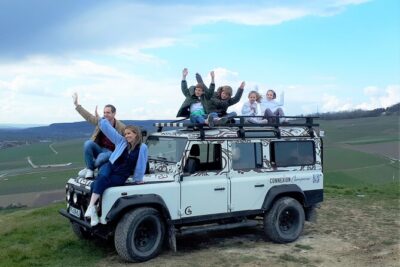
Exclusive Champagne Cellars & Dom Perignon Vineyards tour
Our review →
Vineyard and Triple Tasting First Cru in the Mountains of Reims
Our review →
Private Epernay Trip with Champagne Vineyard Tastings
Our review →
Every list this estate visit appears in