

REVIEW · ITALY
History & Local Wines: Amphitheater, Mitrium and Winery Visit
Ancient stones, strong wine, one busy day. This private outing combines Santa Maria Capua Vetere’s Roman sites with a winery near Mount Vesuvius, giving you two very different sides of Campania in about five hours. I like the contrast between the solemn Mithraic temple and the relaxed food-and-wine stop. I also like the hotel pickup and private format, which save you from arranging transport between Naples and the countryside.
The main drawback is the price: $868.20 per person is a serious expense for a five-hour tour. The route also covers a lot of ground, so it suits you best if you want a guided overview rather than a slow, independent day in one town.
Key points at a glance

- An amphitheater older than Rome’s Colosseum: See the large arena at Santa Maria Capua Vetere, built about a century before the famous Roman amphitheater.
- A rare Mithraic temple: Visit a preserved Mitreum, an underground place of worship connected with the cult of Mithras.
- A private hotel pickup: Your guide meets you at your hotel reception, and a driver handles the journey.
- Three hours of ancient Campania: The first part covers the town, amphitheater, Temple of Santa Maria Capua Vetere, Gladiator Museum, and Mitreum.
- Two hours with wine and local food: Finish at a winery in the Province of Naples, with Mount Vesuvius in view.
- A caution about the posted comments: The four supplied comments describe Taormina, photography, and a village linked to The Godfather, not this Campania route, so they offer little useful evidence about this specific tour.
Why this Campania pairing works
Naples is often treated as a base for Pompeii, Capri, or the Amalfi Coast. Those are worthy choices, but Campania has another story to tell farther north, in the area around ancient Capua. This tour makes that story accessible without asking you to piece together regional trains, taxis, site schedules, and a winery visit on your own.
The day has a clear two-part rhythm. First comes Roman and pre-Roman history in Santa Maria Capua Vetere. Then the mood changes completely at a vineyard near Vesuvius, where you can sit down with local wine and traditional food.
That contrast is the best reason to consider booking. You are not spending five hours looking at one type of monument. You get an arena built for public spectacle, a religious site connected with a less familiar ancient cult, and a modern food tradition shaped by volcanic soil.
Still, you should set your expectations correctly. This is not a long archaeological program with hours at every site. The first stop is allocated about three hours, including several attractions, and the winery gets about two hours. You will receive an organized introduction, not an exhaustive study of ancient Capua.
More Winery Tours in Italy
- Private Full-Day Tour to Pompeii and Mt. Vesuvius with Winery Visit
★ 4.5 · 14 reviews - Mt Vesuvius with Winery Visit
★ 4.5 · 5 reviews - Vesuvius, Pompeii Ruins, experience vineyards and the winery tour with lunch.
★ 5.0 · 2 reviews
Meeting your guide in Naples
The guide meets you at your hotel reception, which makes the morning easier if you are staying in Naples. You do not need to locate a distant meeting point or work out the first leg of the journey yourself. A driver takes you to Santa Maria Capua Vetere, while your private guide leads the sightseeing.
The private format matters here. Only your group participates, so the pace can be more personal than on a large coach outing. You can ask questions as you go, and the guide can spend more time on the sites that interest you most, although the supplied details do not promise a fully customized itinerary.
Pickup is offered, but the information does not specify the exact pickup area, vehicle type, or drive time from your hotel. I would confirm those points before paying, especially if you are staying outside central Naples.
The tour is listed as operating from 8:00 a.m. to 8:00 p.m., Monday through Sunday, during the stated operating period. That broad window gives you some scheduling flexibility, but your actual start time should be confirmed when you book.
Santa Maria Capua Vetere and the older-than-Rome arena
Santa Maria Capua Vetere was founded by the Etruscans in 600 BC and later conquered by Rome in 340 BC. That timeline alone makes the town worth your attention. You are not simply visiting a Roman ruin. You are walking through a place with layers that reach back before Roman control of the region.
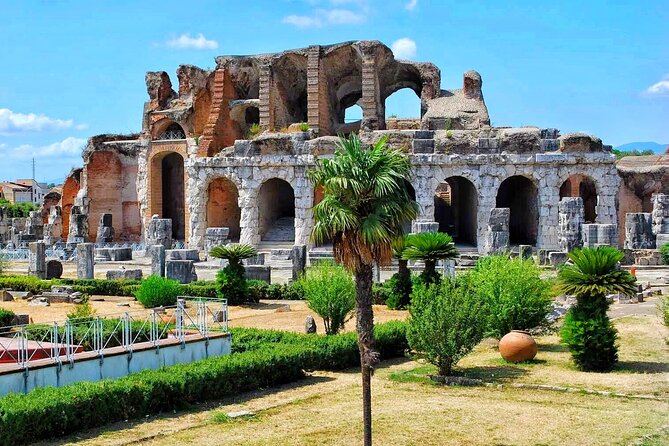
The amphitheater is the headline stop. It was built about one century before the famous amphitheater in Rome, making it an important part of the story of Roman public entertainment. The site is also linked with gladiatorial history and Spartacus, whose name gives the arena extra pull for anyone interested in the ancient world.
An early amphitheater was not just a pretty ruin. It was a working public building designed for spectacle, crowds, and carefully staged violence. Your guide can help connect the surviving structure with the social system that produced it. Without that explanation, large ancient walls can blur together. With context, the size and purpose of the arena become easier to grasp.
You should allow yourself time to look beyond the most obvious photo. Notice the scale of the structure, the open space, and the way the site communicates the power of Roman entertainment. The supplied information does not give details about current exhibits, seating access, or the exact condition of every section, so do not assume that every part of the arena is open to you.
The Gladiator Museum adds another layer to the visit. Its focus should help you place the amphitheater within the wider world of gladiatorial training and performance. Since the tour description does not specify the museum’s displays, size, or visit length, think of it as a focused companion to the arena rather than a full museum day.
The Temple of Santa Maria Capua Vetere
The town visit also includes the Temple of Santa Maria Capua Vetere. The supplied description gives no detailed account of the temple’s architecture or collection, so the value here comes largely from seeing another part of the town’s ancient and religious identity with a guide.
This is where a private tour can be useful. A guide can point out what you are looking at and explain how the temple fits into the area’s past. You are less likely to walk through, take a quick photo, and leave without understanding why the building matters.
The first section lasts about three hours in total. That time includes the town, amphitheater, Gladiator Museum, and Mitreum, so the schedule may feel full. If you prefer lingering at one site, say so early and ask how much time is available at each stop.
More winery tours around Naples:
- Saint-Émilion: Grand Cru Classé Winery Visit and Tasting
★ 4.6 · 1,118 reviews - Montserrat Full Day Tour with Farmhouse Lunch and Winery Visit
★ 5.0 · 1,068 reviews - Montserrat & Winery Visit Tour with Traditional Farmhouse Lunch
★ 4.5 · 1,035 reviews - Saint Emilion Half-Day Trip with Wine Tasting & Winery Visit from Bordeaux
★ 4.5 · 1,034 reviews
A rare look inside a Mithraic temple
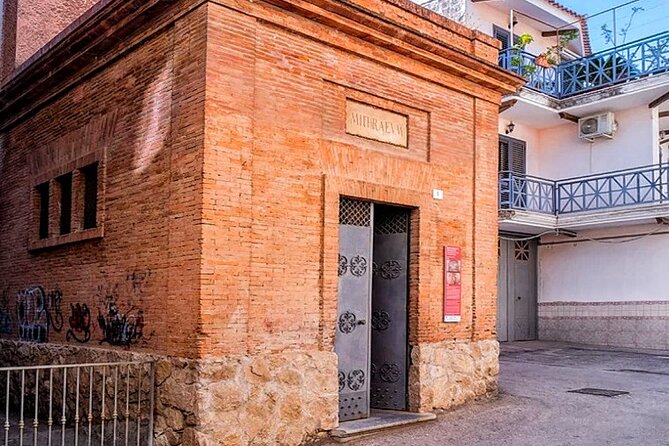
The Mitreum is the most unusual part of the historical program. It was a temple connected with the cult of Mithras, an ancient religion that spread through parts of the Roman world. Only a small number of these temples remain preserved, and the description notes that many were deliberately destroyed after Christianity became dominant.
That survival gives the stop real weight. Unlike a grand arena built for thousands, a Mithraic temple was a more private religious setting. The contrast is striking: one site shows public entertainment, while the other points toward a secretive or restricted form of worship.
You should expect the Mitreum to feel more atmospheric than monumental. The details provided do not specify its access conditions, lighting, size, or whether stairs are involved, so ask the operator if anyone in your group has mobility concerns. The tour states that most people can participate, but it does not promise full accessibility.
This is also the point where a good guide makes a major difference. Mithraic worship is less familiar to many visitors than Roman arenas or temples. Ask about who used the space, what ceremonies may have taken place, and why early Christian authorities targeted these sites. The tour description does not guarantee a particular depth of explanation, but the subject rewards questions.
A winery beneath the presence of Vesuvius
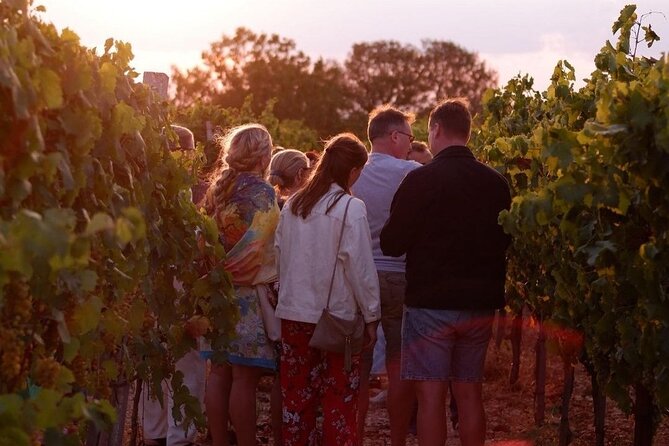
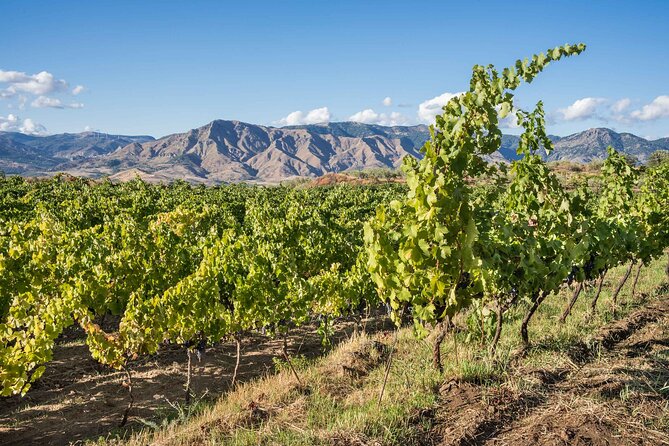
After the ancient sites, you travel to a winery in the Province of Naples. The winery is described as being in front of Mount Vesuvius, so the setting should provide a strong visual change from the town’s archaeological remains.
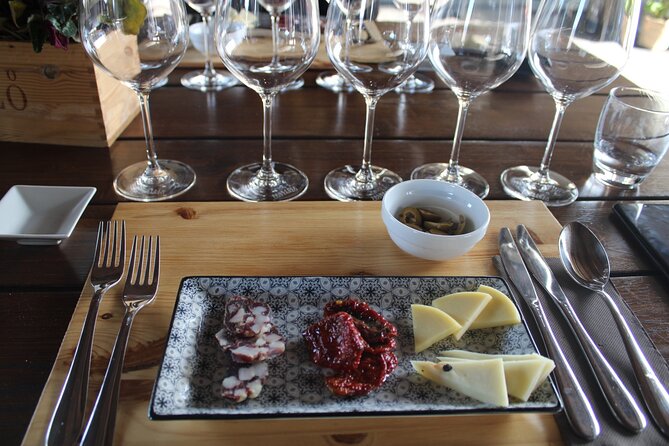
The tasting lasts about two hours. You sample different local wines with traditional food, turning the final part of the outing into a proper pause rather than another quick stop. I like this structure because it gives you time to sit, taste, and enjoy the setting after a morning of walking and listening.
The volcanic setting is not just decoration. Vesuvius is part of Campania’s identity, and vineyards around the volcano reflect the region’s distinct growing conditions. The information does not name the winery, list the wines, or identify the dishes served, so you should not book expecting a particular grape, vintage, menu, or production tour.
That lack of detail is worth checking before departure. Ask whether the tasting includes a fixed number of pours, what traditional foods are served, and if non-drinkers can join the meal portion. None of those points is stated in the supplied information.
Still, the winery stop gives the day a more relaxed finish. You get local wine, regional food, and a view of one of Italy’s most famous volcanoes. For many people, that combination will be more memorable than adding another formal monument to an already history-heavy morning.
Is $868.20 per person good value?
At $868.20 per person, this is not a budget tour. The value depends on what you are buying beyond admission. You are paying for a private guide, a driver, hotel pickup, a five-hour program, and a combined historical and culinary itinerary.
For a private group that wants convenience, the cost may make sense. You avoid transport planning, do not share the guide with strangers, and can move directly between sites. That can be especially useful if your group has limited time in Naples or does not want to handle regional connections.
For one or two people on a tight budget, the price is harder to justify. The tour does not state the group-size discount, and the description does not explain exactly which admissions, tasting portions, meals, or transportation charges are included. Contact Events in Italy for a full cost breakdown before booking.
The four supplied comments should not be used to support the price. They praise a photographer, Taormina, romantic scenery, and a village connected with The Godfather. Those are different places and different activities. The comments may belong to other offerings from the same provider, but they do not confirm the quality of this Capua and winery route.
That mismatch does not prove the tour is poor. It simply means you should judge the offering by its stated itinerary, private format, timing, and inclusions rather than by an unrelated five-star score.
Who should book this outing?
I would recommend it to you if you want a private day with both archaeology and food, especially if you have already seen Naples’ main sights and want something less predictable. It also suits couples, families, or small groups who value a driver and guide more than the lowest possible price.
The tour is a good fit for people who enjoy Roman history but do not want to spend an entire day at one archaeological park. The amphitheater and Gladiator Museum provide recognizable ancient themes, while the Mitreum offers something less familiar.
It may be less suitable if your main goal is a long winery tour, a detailed wine education, or a slow visit to Santa Maria Capua Vetere. The schedule divides the day between several stops, and the tour description gives no specific winery or tasting menu.
The weather policy also matters. The experience requires good weather. If poor weather causes cancellation, you are offered another date or a full refund. You can cancel for a full refund if you do so at least 24 hours before the start time. Changes or cancellations made within 24 hours are not refunded, and late changes are not accepted.
Should you book it?
Book this tour if you want private transportation, unusual ancient sites, and a Vesuvius wine stop in one organized half-day. Its strongest feature is the pairing of the older-than-Rome amphitheater with the rare Mithraic temple, followed by a calmer meal and tasting.
I would pause before booking if $868.20 per person strains your budget or if you need firm details about the winery, inclusions, accessibility, or exact timing. Ask those questions first. For a group that values ease and a private guide, this can be a distinctive Campania outing. For an independent visitor watching costs, arranging the historical sites and wine visit separately may offer better value.
FAQ
Where does the tour take place?
The tour begins in Naples with pickup at your hotel reception. It then visits Santa Maria Capua Vetere and a winery in the Province of Naples near Mount Vesuvius.
How long does the tour last?
The full experience lasts approximately five hours. About three hours are allocated to Santa Maria Capua Vetere and about two hours to the winery.
Is hotel pickup offered?
Yes. The private guide meets you at your hotel reception, and a driver takes you to the sightseeing locations.
Is this a private tour?
Yes. Only your group participates in the activity.
What will I see in Santa Maria Capua Vetere?
The program includes the town, its amphitheater, the Temple of Santa Maria Capua Vetere, the Gladiator Museum, and a Mitreum connected with the cult of Mithras.
Is the amphitheater older than Rome’s Colosseum?
According to the tour information, the amphitheater was built about one century before the famous amphitheater in Rome.
What happens at the winery?
You taste different local wines paired with traditional food. The winery is described as being in front of Mount Vesuvius.
What is the price?
The listed price is $868.20 per person. Group discounts are offered, but the exact discount is not specified.
Can I cancel for a full refund?
Yes. You can cancel at least 24 hours before the start time for a full refund. Cancellations made less than 24 hours before the start time are not refunded. If poor weather causes the tour to be canceled, you are offered another date or a full refund.
More History and Wine Days around Naples
- Small-Group Full-Day Tour of Côte de Nuits, Côte de Beaune Vineyards and Beaune Historical District
★ 5.0 · 364 reviews - Albufeira Wine Tour: 2 Vineyards, 6 Tastings & Historic Silves
★ 5.0 · 123 reviews - San Diego to Temecula: Wine Country Tour & Historic Old Town
★ 5.0 · 93 reviews - Partinico: Historic Sicilian Vineyard & Wine Tasting Tour
★ 4.8 · 36 reviews
Just added around Naples
- Wine Tour and Lunch with Winetasting and Vineyard Visit★ 5.0 · 23 reviews
- Mt. Vesuvius Tour from Naples with Lunch at a Vineyard Included★ 4.0 · 3 reviews
- Vesuvius, Pompeii Ruins, experience vineyards and the winery tour with lunch.★ 5.0 · 2 reviews
- Private Full-Day Tour to Pompeii and Mt. Vesuvius with Winery Visit★ 4.5 · 14 reviews
- Tour from Napoli to pompei/ercolano: Luxury Tour, Secret Vineyard★ 5.0 · 2 reviews
- Naples Tuk Tuk Experience Views and Vineyards★ 5.0 · 3 reviews
- Mt Vesuvius with Winery Visit★ 4.5 · 5 reviews
- Pompeii excavations and its vineyards★ 3.5 · 3 reviews
Winery Tours, compared.
Saint-Émilion: Grand Cru Classé Winery Visit and Tasting
Our review →
Montserrat Full Day Tour with Farmhouse Lunch and Winery Visit
Our review →Montserrat & Winery Visit Tour with Traditional Farmhouse Lunch
Our review →
Saint Emilion Half-Day Trip with Wine Tasting & Winery Visit from Bordeaux
Our review →
Chianti Delights: A Tale Of Two Wineries With A Vineyard Dinner
Our review →

Saint-Emilion: Grand Cru Classé Guided Winery Visit & Picnic
Our review →
Douro Valley for Wine Lovers with Visit to 4 Wineries and Lunch
Our review →Every list this estate visit appears in