
REVIEW · FRANCE
Discovery of the Bordeaux vineyard in 3 wines
Bordeaux makes more sense one glass at a time. This intimate tasting at Le Pied à Terre gives you a clear introduction to the region through three carefully chosen wines, with Roman-era stories, simple tasting advice, and an easygoing host. I like the way the experience compares the powerful wines of Bordeaux’s Left Bank with the softer style of the Right Bank. The small group, limited to 12 people, also leaves room for questions.
I also like the practical approach. You learn how to taste, how appellations work, which grapes shape Bordeaux wines, and how food can change what you notice in the glass. The Basque cheese, ham, bread, and charcuterie from Maison Pierre Oteiza make the lesson feel social rather than stiff. The main consideration is that this is a tasting room session, not a visit to a working vineyard or château. The setting is a wine shop with an upstairs tasting room, and one participant found the talk slightly free-form for intermediate wine drinkers.
Key points at a glance
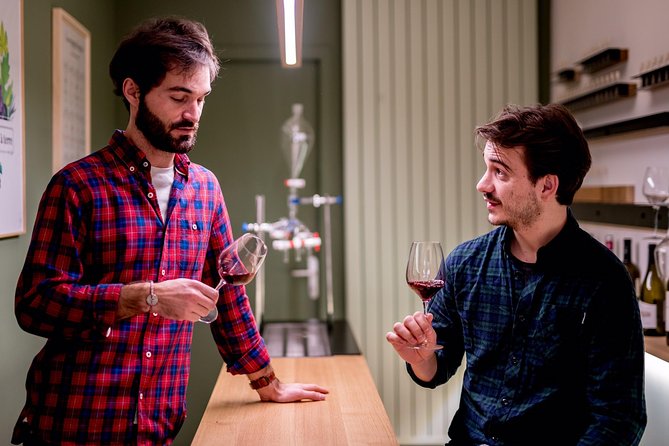
- Three wines, three Bordeaux perspectives: Taste a powerful Left Bank red, an elegant Right Bank red, and a fresh dry white.
- A useful lesson for beginners: Learn the basic tasting steps without pressure, fuss, or wine-world jargon.
- Bordeaux explained through place: Hear how appellations, grape varieties, estates, and winemaking methods shape the bottle.
- Small-group setting: The experience accepts a maximum of 12 people, making questions and conversation easier.
- Basque pairings included: Cheese, ham, bread, and charcuterie from Maison Pierre Oteiza accompany the tasting.
- Central Bordeaux meeting point: Start and finish at 22 Rue Judaïque, near public transportation.
Three glasses that explain Bordeaux
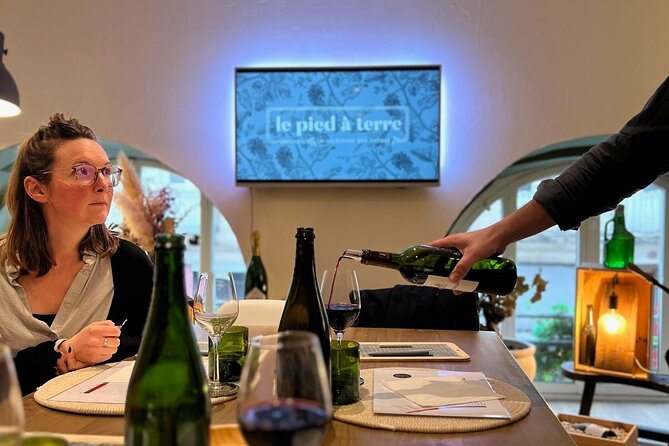
The clever idea here is to use three wines as a map. Bordeaux can look confusing on paper, with its Left Bank and Right Bank, many appellations, strict naming rules, and famous estates. A guided comparison gives you something more useful than a list of labels.
The first red represents the Left Bank, known in this session for power and structure. The second red introduces the Right Bank style, presented as more elegant. The third wine is a dry white from one of Bordeaux’s strong white-wine areas, bringing freshness and contrast to the lineup.
You are not simply handed three glasses and left to guess. Each wine is placed in context through its appellation, grape varieties, estate background, and winemaking method. That matters because Bordeaux is a blended-wine region. The character in your glass comes from both the grapes and the place where they grow, along with the choices made in the cellar.
The exact producers and bottles can vary, so you should treat the three-wine lineup as a regional lesson rather than a guaranteed shopping list. The point is to understand the differences well enough to make better choices at a restaurant or wine shop later.
A few more vineyard visits around Bordeaux worth a look
- Saint Emilion Half-Day Trip with Wine Tasting & Winery Visit from Bordeaux
★ 4.5 · 1,034 reviews - Bordeaux: Vineyards Wine Tasting Half-Day Trip
★ 4.2 · 470 reviews - Half-Day Wine tour across Bordeaux’s Vineyards
★ 3.5 · 429 reviews
Starting with the history of Bordeaux wine
The session also gives Bordeaux some historical shape. You hear stories reaching back to Roman times, which helps explain why wine is not just a modern tourist product here. The discussion connects Bordeaux’s past with the way its wine trade, estates, and regional names developed.
I like this part because history is most useful when it explains what you are drinking. A story about the city or the region has value when it helps you understand why certain areas carry particular reputations, or why a bottle’s label includes several layers of information.
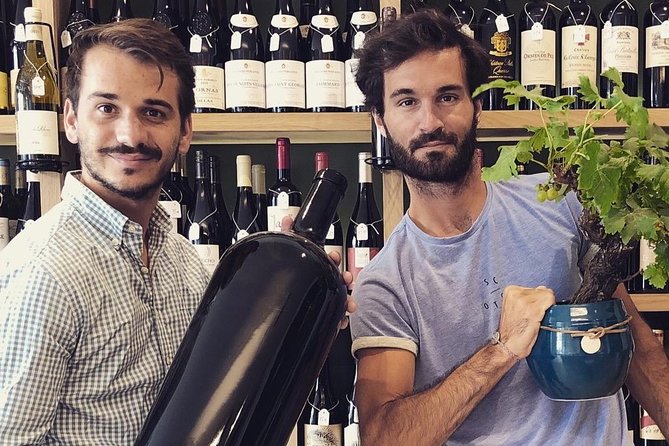
The presentation style appears to be one of the experience’s strongest features. James is described as an English-speaking wine expert who combines wine knowledge with humor and patience. Pierre, one of the brothers involved in the experience, is also praised for making the class friendly and easy to follow. The hosts are not presented as formal lecturers. They encourage questions and explain the basics without making newcomers feel out of place.
That tone matters in Bordeaux, where wine language can become intimidating in a hurry. You do not need to know the difference between every appellation before arriving. The class is designed to give you a working foundation.
Learning how to taste without the performance
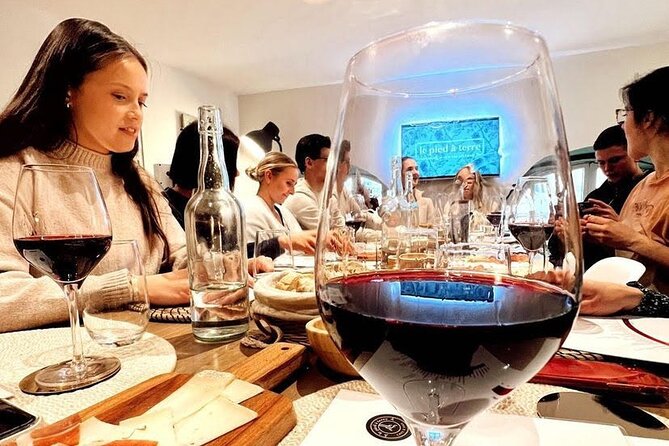
Many wine tastings spend too much time on ritual. Here, the teaching focuses on useful habits: looking at the wine, smelling it, tasting it, and thinking about its balance and finish. You learn to compare the three wines rather than judge each one in isolation.
The practical lesson is especially helpful if you are new to wine. You can ask basic questions, and the hosts explain the process in a relaxed manner. One of the best features is the lack of pretension. The experience is intended as education you can use in real life, not a contest to see who can name the most aromas.
For a more experienced wine drinker, the value comes from the regional comparison and the chance to ask detailed questions. The session has also been praised for explaining Bordeaux’s classification and governance system, including the rules that allow producers to label wine as coming from the Bordeaux region.
Keep in mind that a friendly, conversational presentation can wander a little. If you prefer a tightly scripted class with technical detail delivered in a fixed order, the style may feel loose. For most visitors, though, that informality is part of the appeal.
Left Bank power, Right Bank grace, white-wine freshness
The tasting sequence is well chosen. The Left Bank red gives you a reference point for Bordeaux’s more structured side. You can think about body, tannin, and the way a wine feels firm or powerful rather than simply asking if you like it.
The Right Bank red then offers a contrast. The stated aim is to show elegance, so you can compare the two reds and notice how different areas within the same broad region can produce wines with distinct personalities. This side-by-side approach teaches more than tasting two unrelated reds from different countries.
The dry white changes the pace. It brings freshness to the tasting and reminds you that Bordeaux is not only about famous red blends. It also gives you a chance to think about food pairing from another angle.
Two of the wines may be Grand Cru Classés, based on the experience description provided by one participant, but that should not be treated as a guarantee for every session. The important point is that the tasting aims to include representative and notable examples rather than anonymous table wine.
Same place, a completely different cellar door:
- Medoc Region Wine Day Trip with Vineyard Visits & Tastings from Bordeaux
★ 4.5 · 293 reviews - Médoc Region Half-Day Wine Tour with Winery Visit & Tastings from Bordeaux
★ 4.5 · 211 reviews - Bordeaux: St-Emilion Vineyards e-Bike Tour with Wine & Lunch
★ 4.9 · 181 reviews - Bordeaux: Médoc & St-Emilion Wine 3 châteaux with lunch
★ 4.9 · 116 reviews
Basque cheese and charcuterie at the table
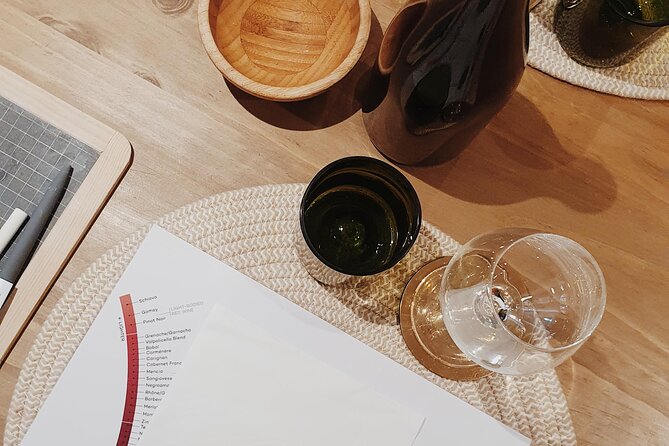
The food is modest but well chosen. The sample offering includes Basque cheese and charcuterie from Maison Pierre Oteiza, along with bread, ham, and other small accompaniments. This is not a full meal, so you should eat beforehand if you arrive hungry.
The pairings serve a real purpose. Salt, fat, acidity, and texture can alter how you experience wine. A bite of cheese may make a red feel softer, while cured meat can change your sense of fruit and tannin. You do not need to become a food-pairing expert, but the examples give you something concrete to try.
Vegetarian and vegan arrangements have been possible when requested ahead of time. You should communicate those needs in advance rather than assume the standard board will be changed on the spot.
The food also helps the social side of the event. The group may include people from several countries, and the shared board gives everyone an easy way to start talking. Solo visitors can find this especially useful because the tasting naturally creates conversation without requiring you to arrive with a group.
A wine shop setting, not a vineyard visit
The meeting point is 22 Rue Judaïque in Bordeaux, and the activity returns to that same location. It is near public transportation, which makes it practical to fit into a day of sightseeing.
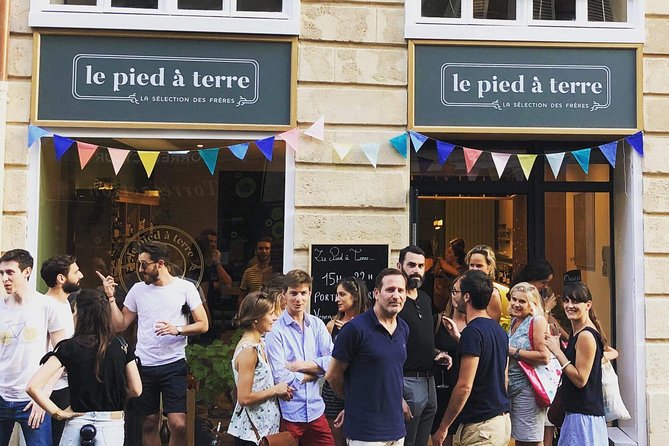
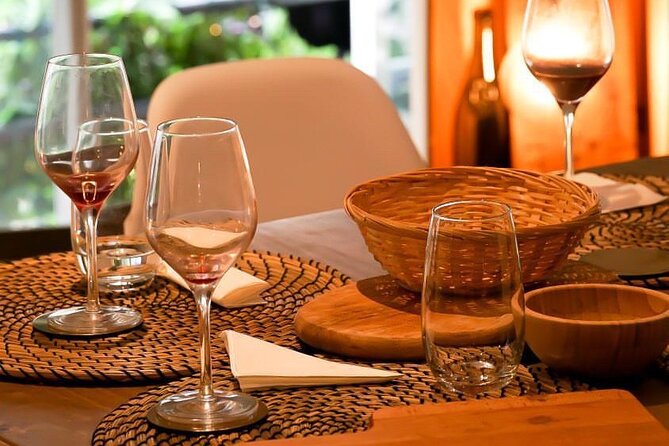
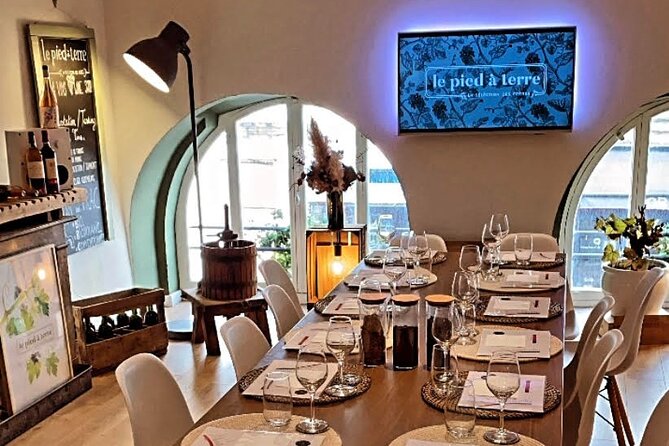
The setting is Le Pied à Terre, described as a wine shop with an upstairs tasting room and cellar-style atmosphere. It is easy to find and gives the session a direct connection to wine buying. You are in a place where bottles are part of daily business, not in a staged attraction built only for tour groups.
That is also the main limitation. The title may suggest a vineyard visit, but you do not travel out into the countryside or tour a château. There are no vineyard rows, production tanks, or estate grounds in this experience. If you want to see how Bordeaux wine is grown and made on site, you will need a separate winery excursion.
For a first introduction, however, the city location has clear advantages. You spend less time in transit, and the 90-minute format fits neatly between other Bordeaux plans. It works well on a day when you want substance without committing to a half-day trip beyond the city.
How much value do you get for $42.33?
At $42.33 per person, this is priced above a casual bar tasting, but it includes three wines, guided instruction, regional background, tasting technique, and food pairings. The value depends on what you want from the experience.
If you only want three glasses of Bordeaux wine, you can probably spend less elsewhere. If you want to understand why the wines differ and how to read Bordeaux labels, the guided explanation adds the useful part of the cost.
I see the best value for visitors who are planning to drink more Bordeaux during their trip. After this class, you should have a better sense of what Left Bank and Right Bank mean, how white Bordeaux fits into the picture, and how to ask sensible questions when ordering a bottle.
The small group also matters. With a maximum of 12 people, the host can respond to questions more easily than in a large commercial tasting. That personal exchange is one reason the experience receives such strong overall marks, with 98 percent of participants recommending it and an average rating of 4.9 from 133 ratings.
Timing, group size, and the small practical details
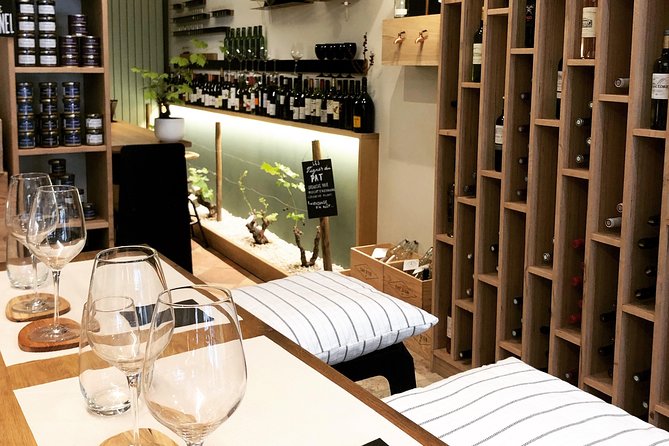
The listed duration is about one hour and 30 minutes. Some descriptions of the experience refer to a couple of hours, so allow a little flexibility rather than scheduling a train or museum entry immediately afterward.
The published start time should be checked carefully before booking. One participant noted that the actual tasting took place at 2:30 p.m., despite a different morning time appearing online. That kind of schedule mismatch can ruin an otherwise pleasant afternoon, so confirm the local start time directly when making plans.
The experience is offered in English. Service animals are allowed, and the location is near public transportation. Confirmation is provided at booking, and the activity requires a minimum number of people. If that minimum is not reached and the session is canceled, you are offered another date or a full refund.
Free cancellation is available until 24 hours before the start time. Changes or cancellations inside that window are not accepted for a refund, so keep the cutoff in mind.
Who will enjoy this Bordeaux tasting most?
I would recommend this experience to several kinds of visitors:
- First-time Bordeaux drinkers who want a clear introduction.
- Couples or friends looking for a relaxed indoor activity.
- Solo visitors who enjoy meeting people around a shared table.
- Wine lovers who want to compare Left Bank and Right Bank styles.
- Visitors who prefer an English-language class in central Bordeaux.
- Anyone planning to visit vineyards later and wanting some background first.
It is also a good choice for people who dislike formal wine culture. The hosts are praised for humor, warmth, and plain explanations. The session treats wine seriously without treating the people drinking it as if they need an exam.
You may want something else if your main goal is scenery, estate architecture, or a full production tour. This is a city tasting and a short lesson, not a countryside excursion. Intermediate drinkers may also prefer a more structured technical class, especially if they already know the basic tasting process.
Should you book Discovery of the Bordeaux Vineyard in 3 Wines?
Yes, if you want a friendly and practical introduction to Bordeaux wine without leaving the city. The three-glass format gives you a useful comparison, and the hosts add history, tasting skills, food pairing advice, and plenty of room for questions.
I would book it near the start of your Bordeaux visit. You can use what you learn when choosing wine with dinner or deciding which château excursion to take later. Just confirm the start time, remember that the tasting takes place at Le Pied à Terre rather than at a vineyard, and request dietary adjustments in advance.
For a short, social, English-language lesson with real regional context, the $42.33 price is fair. It is especially strong for beginners, while experienced drinkers should book only if they enjoy informal teaching and want a fresh comparison of Bordeaux’s main wine styles.
FAQ
Where does the Bordeaux wine tasting start?
It starts at Le Pied à Terre, located at 22 Rue Judaïque, 33000 Bordeaux, France.
How long does the experience last?
The stated duration is approximately one hour and 30 minutes.
How many wines are included?
The tasting includes three Bordeaux wines: a powerful Left Bank red, an elegant Right Bank red, and a fresh dry white.
Is food included with the wine?
Yes. The sample pairing includes Basque cheese and charcuterie from Maison Pierre Oteiza, with bread, ham, and related small accompaniments.
Is the tasting offered in English?
Yes, the experience is offered in English.
Can I cancel for a full refund?
Yes. You can cancel at least 24 hours before the start time for a full refund. Cancellations or changes made less than 24 hours before the experience are not accepted for a refund.
Just added around Bordeaux
- 3H private city tour of Bordeaux and vineyard in a Citroën DS★ 5.0 · 4 reviews
- Private tour in the Sauternes wine region – discover Bordeaux sweet Crus Classés★ 5.0 · 7 reviews
- Half-Day Guided Wine Tasting Tour in Bordeaux Vineyards★ 5.0 · 15 reviews
- Visit Saint-Emilion and Pomerol:Vineyards, lunch and tastings included★ 5.0 · 10 reviews
- Private tour in the prestigious Médoc wine region★ 5.0 · 7 reviews
- Private 2cv tour in the vineyards and Wine tasting★ 5.0 · 14 reviews
- 2 in 1 – Visit of Bordeaux and excursion in a vineyard★ 5.0 · 12 reviews
- From Bordeaux: Médoc Vineyard and Chateau Tour by Sidecar★ 4.6 · 8 reviews
Bordeaux Vineyard Tours, compared.
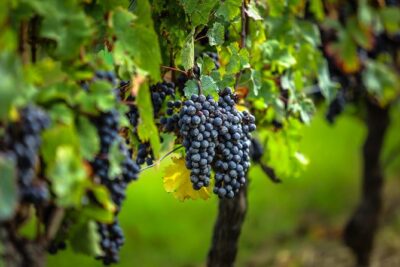
Saint Emilion Half-Day Trip with Wine Tasting & Winery Visit from Bordeaux
Our review →
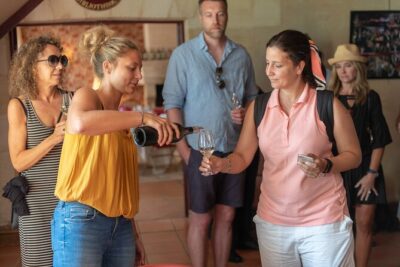
Medoc Region Wine Day Trip with Vineyard Visits & Tastings from Bordeaux
Our review →
Médoc Region Half-Day Wine Tour with Winery Visit & Tastings from Bordeaux
Our review →
Château Olivier: One Hour Vineyard Tour with Wine Tasting
Our review →Every list this estate visit appears in