
REVIEW · FRANCE
Saint-Émilion: Vineyard Walking Tour and Tasting
Wine country makes more sense when you walk through it. This two-hour visit to Château Haute-Nauve combines a vineyard walk, cellar tour, and tasting led by a fourth-generation family member. I like the personal feel, especially when Florent or Marie-Anne explains the work behind each bottle. I also like the price: $29 includes four wines, two with Grand Cru appellations.
The main drawback is location. The château sits about 3 kilometers from Saint-Émilion village, so you should plan your transport rather than simply wander over after lunch. The visit is also outdoors for part of the time, making comfortable shoes and weather-ready clothing important.
Key points at a glance
- A fourth-generation family estate: Florent or Marie-Anne guides you through the property and explains how the family works its own vines.
- A real vineyard walk: You see different plots and learn how vine care changes with the seasons, weather, and harvest.
- More than a tasting room tour: The route includes fermentation equipment, pumps, presses, and the barrel cellar.
- Four wines at the finish: The tasting includes four Château Haute-Nauve wines, with two carrying Grand Cru appellations.
- Small groups of up to 10: The compact size leaves room for questions and gives the visit a friendly, informal feel.
- An easy add-on to Saint-Émilion: The estate is close to the village, but arriving by car is recommended.
Why this small family château feels different
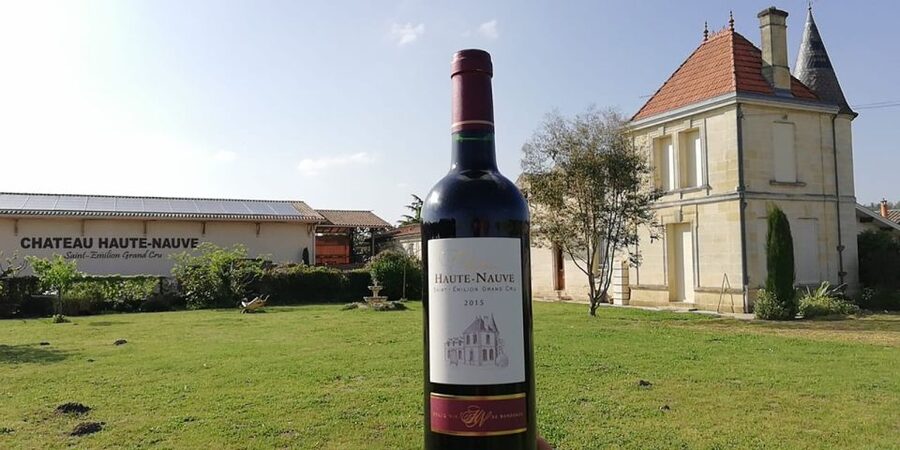
Saint-Émilion has no shortage of polished wine estates. Some visits focus on grand buildings and formal presentations. Château Haute-Nauve offers something more direct: you meet a member of the family that actually runs the vineyard and hear about the daily decisions behind the wine.
Florent is often the guide, while Marie-Anne may also lead the tour. The family connection matters because the conversation reaches beyond general Bordeaux wine facts. You hear about their own plots, their own equipment, their approach to frost, and the changes they are making to keep the estate practical for the future.
I especially like the balance between tradition and experimentation. The château has four generations of family experience, but the visit also covers solar panels, a wind turbine, diversification, and new wine varieties. This is not a frozen picture of old France. It is a working estate dealing with modern weather and business pressures.
The group limit of 10 helps. A family of six, a couple, or a small mixed group can ask questions without fighting for the guide’s attention. If your group is small enough, you might even find yourself with a private visit, though that is not guaranteed.
More walks through the vines around France:
- Gourmet walk in the heart of the vineyards with Champagne tasting near Epernay
★ 5.0 · 45 reviews - Champagne tasting, panoramic walk in the vineyards
★ 5.0 · 42 reviews - 2-hour walk – Castles and vineyards
★ 4.5 · 11 reviews
Walking through the Saint-Émilion vines
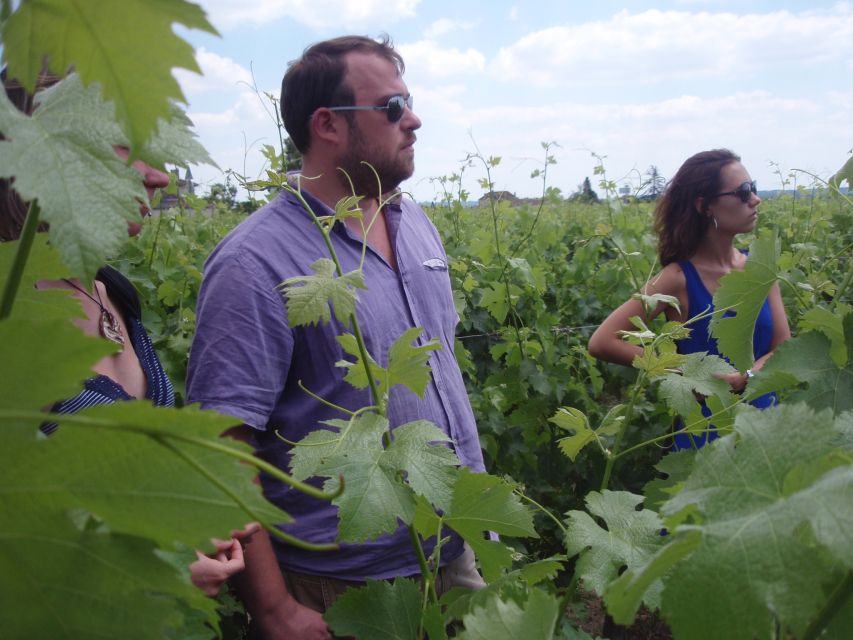
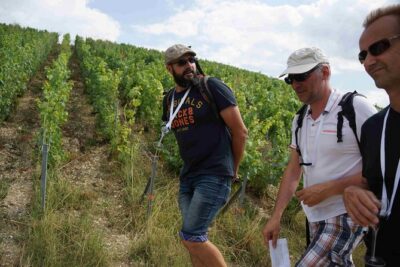
The tour begins outside in the vineyard. Allow roughly 45 to 50 minutes for this part, based on the way the visit is structured. You walk among several plots while your guide explains the Saint-Émilion appellation and the grape varieties used at the estate.
This section is useful even if you already know the basics of wine. The focus is not just on grapes and soil in the abstract. You learn how the work changes through the year, from caring for the vines to preparing for harvest, and how frost and other weather problems can affect the crop.
That seasonal view gives you a better way to understand the price of a bottle. Before a grape reaches the cellar, the family has spent months managing the vines and responding to conditions they cannot control. A good harvest is never automatic.
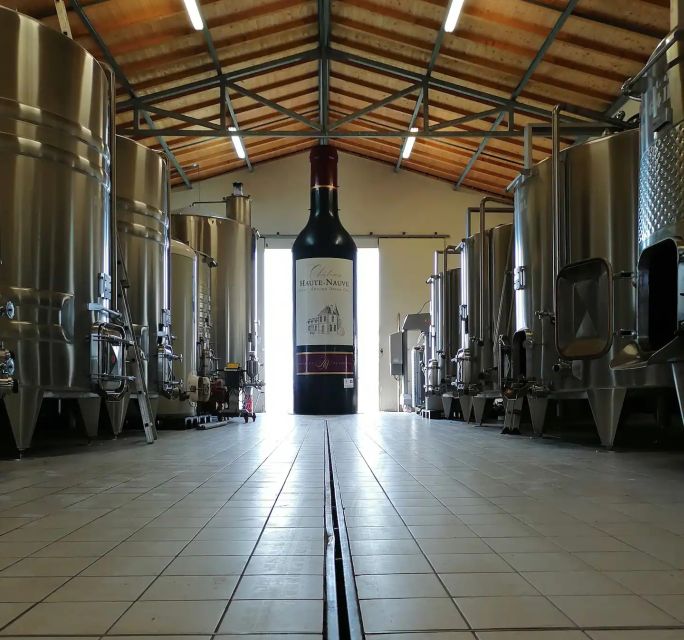
Look for the estate’s unusual sights along the way. There is a wind turbine and a giant wine bottle that rises about 6 meters high. The enormous bottle is more than a photo stop. It is connected with the château’s approach to frost protection, and it helps show how a working vineyard can use inventive equipment alongside older methods.
The property also has solar panels, visible near the large building and car park. These details make the visit feel grounded in present-day winemaking rather than only in old family stories.
The walking section does require some attention to the weather. You may be outside under sun, wind, or light rain, so wear shoes suitable for uneven vineyard ground and bring clothing that matches the forecast. The tour is listed as wheelchair accessible, but anyone needing specific mobility arrangements should confirm the conditions of the route before booking.
From grape to wine in the vinification cellar
After the vines, you move inside to the vinification cellar. This is where the tour shifts from agriculture to production.
Your guide explains what happens after the grapes are picked, including fermentation, pumping, and pressing. You also get to see the technology involved rather than hearing about it in a purely theoretical way. That makes this a strong choice for anyone who has taken tastings before but still feels unsure about the production stage.
I like this part because it fills the gap between vineyard scenery and the wine in your glass. You can connect the equipment to the decisions discussed outside. Frost affects the crop. Harvest quality affects what enters the cellar. Fermentation and pressing then shape what becomes wine.
The presentation is described as clear and entertaining, with room for questions. Florent’s humor and personal style are often part of the appeal, but the visit is not built around a performance. The information remains practical and tied to the estate.
Families can also manage this section well. A child or teenager may not care about every technical detail, but the machinery and large-scale production steps give the tour something concrete to look at. One family with children aged 9 and 17 found the two-hour format a good fit.
The barrel cellar and the slow part of winemaking
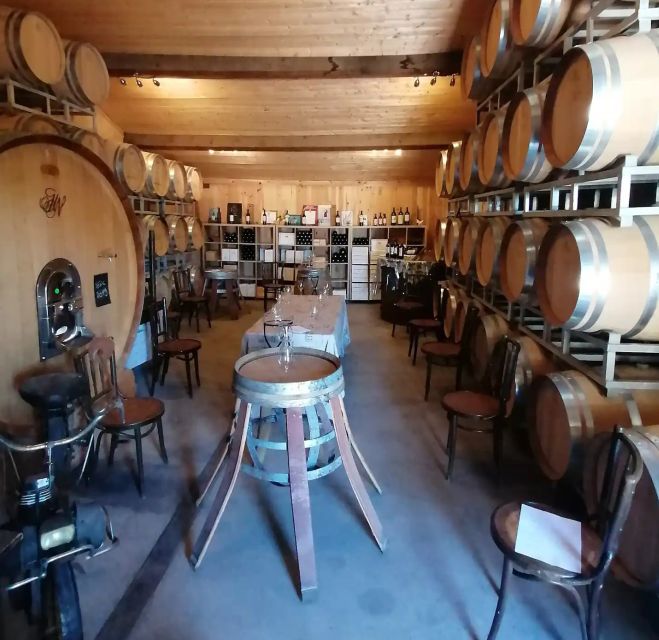
The final production stop is the barrel cellar, where you learn about ageing. This gives you the full route from vine to finished bottle: growing, harvesting, fermenting, pressing, ageing, and tasting.
The barrel cellar is not presented as a dramatic showpiece. That is part of its value. It helps you see that wine production includes long periods when little appears to happen, even though the wine is changing over time.
Your guide explains the methods used for ageing and how the finished wines reach the bottle. The estate also has modern bottle designs, which fit its wider interest in combining family tradition with new ideas.
The full visit takes about two hours. That is long enough to cover the estate properly but short enough to fit into a day that also includes Saint-Émilion village. You should not expect a half-day technical course or a long meal. The pace is more like a well-shaped introduction to one family winery.
A few more vineyard visits around France worth a look
- Saint-Émilion: Grand Cru Classé Winery Visit and Tasting
★ 4.6 · 1,118 reviews - Saint Emilion Half-Day Trip with Wine Tasting & Winery Visit from Bordeaux
★ 4.5 · 1,034 reviews - Saint-Émilion: Bordeaux Vineyard Tour and Wine Tasting
★ 4.8 · 578 reviews - Bordeaux: Vineyards Wine Tasting Half-Day Trip
★ 4.2 · 470 reviews
Four wines, including Grand Cru bottles
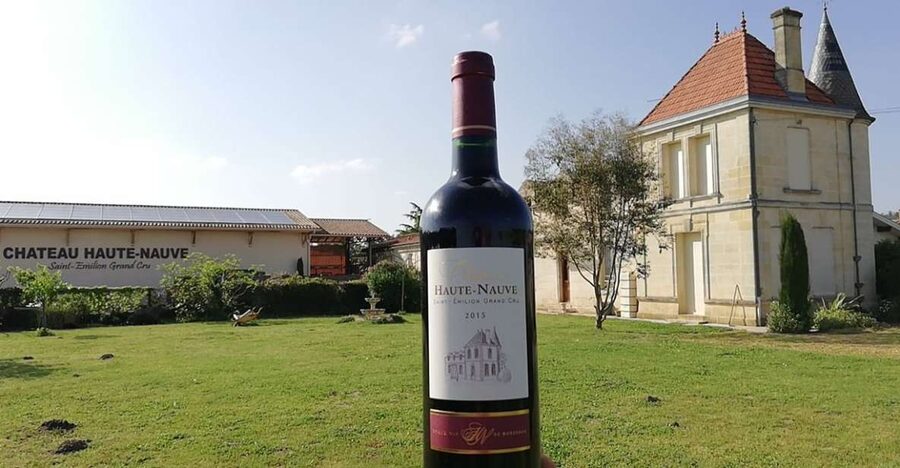
The tasting comes at the end, after you have seen where the wines are made. Four Château Haute-Nauve wines are served, including two with Grand Cru appellations.
That sequence matters. Tasting first can leave you with a pleasant glass and not much understanding of its origin. Here, you have already heard about the vineyard plots, the family’s methods, and the cellar equipment. The tasting becomes a chance to connect those ideas with differences in flavor and structure.
The wines are presented as a varied group, with different styles ranging from smooth to full-bodied. The guide explains what you are tasting and gives you a chance to compare the bottles. You do not need advanced wine vocabulary to enjoy this part. The setting is relaxed, and the explanations are intended to make the wines easier to understand.
The Grand Cru wines are likely to be the main attraction for many visitors, but do not assume the tasting is only about prestige labels. The value comes from trying four wines side by side and learning how the estate’s products differ.
You can buy bottles afterward if you find something you like. The purchase is optional, and the experience is not presented as a sales pitch. That is useful if you are traveling with limited luggage or simply want to taste without feeling obliged to buy.
What $29 gets you
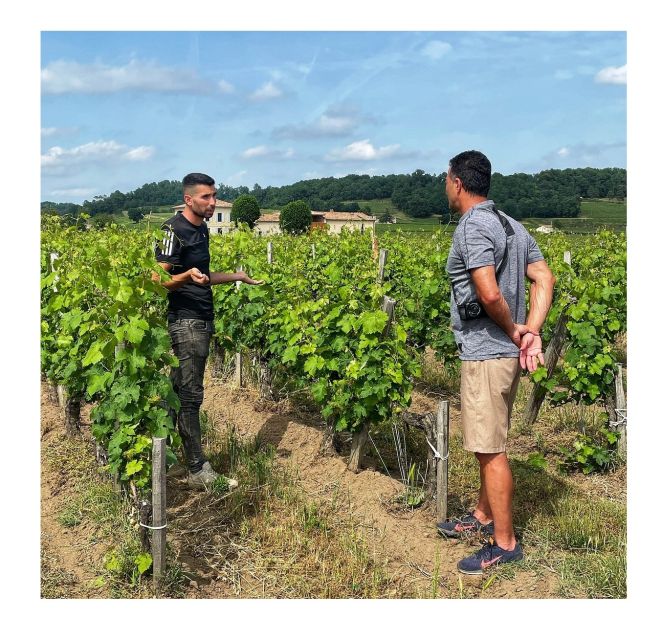
At $29 per person, this is a strong-value wine visit in the Saint-Émilion area. The fee covers the vineyard walk, the complete cellar visit, a family-led explanation of production, and four tastings.
Many wine experiences charge more for a shorter visit or focus mainly on a tasting room. Here, you get two hours and see the working stages of the estate. The small group limit adds value because you have a better chance to ask about the vines, equipment, and wine styles.
There are limits. Food is not included, and transport is your responsibility. You are paying for an educational visit and tasting, not a lunch among the vines. If you want a food-and-wine pairing or an elaborate château reception, this may feel too simple.
For most people spending a day in Saint-Émilion, though, the price is easy to justify. It gives you context that a bottle shop tasting cannot provide, while leaving enough time and money for the village itself.
Getting to Château Haute-Nauve
The meeting point is inside Château Haute-Nauve. Look for the car park near the large building with solar panels and the Château Haute-Nauve purple sign.
The estate recommends arriving by car. Since it is about 3 kilometers from Saint-Émilion village, you should not treat it as an arrival point you can figure out at the last minute. A car gives you the simplest access, especially if you intend to buy bottles.
Some visitors have arranged a ride from the village, so a hired car or ride service may also work. Transport is not included, and the tour does not provide a pickup service. Check your return plan before you set out, particularly if you are traveling without a car.
A useful plan is to visit the château first or last, then spend time in Saint-Émilion village separately. The estate and the historic village offer different experiences: one shows working wine production, while the other gives you the famous medieval setting.
Who will enjoy this tour most?
I would recommend this visit to first-time wine visitors who want a clear explanation without a stiff classroom atmosphere. You get the basic structure of Bordeaux winemaking, but the family connection keeps it personal.
It also suits people who have already visited larger estates and want a smaller operation. You can ask about frost, equipment, new varieties, sustainability, and the family’s plans rather than hearing only a prepared speech about old cellars.
Families can consider it too. The vineyard walk, giant bottle, machinery, and tasting create several different points of interest. Children will not take part in the wine tasting, of course, but the overall visit can work for mixed-age groups.
Wine enthusiasts should enjoy the production detail, although you should keep your expectations realistic. This is a two-hour introduction, not a specialist master class on Bordeaux classification, soil chemistry, or vintage analysis.
The tour is also a good fit for visitors who speak French or English. Live guiding is available in both languages.
What to know before you book
Book this if you value direct contact with a family producer, want to walk through actual vines, and prefer a small group to a large bus tour. The combination of vineyard, production cellar, barrel room, and four-wine tasting gives you a full picture for a reasonable price.
Think twice if you need included transport, a meal, or a fully indoor activity. The location requires planning, and part of the visit takes place outside. Bring comfortable shoes and weather-appropriate clothing.
The flexible booking terms also make it easier to fit into a changing itinerary: cancellation is allowed up to 24 hours before the visit for a full refund, and you can reserve now and pay later.
Should you book Château Haute-Nauve?
Yes, I would book it for a practical and personal introduction to Saint-Émilion wine. The best reasons are the family-led format, the chance to see the vineyard before tasting, and the unusually complete explanation of production for only $29.
Choose it especially if you want to meet the people behind the bottles rather than simply admire a château from the outside. Florent’s friendly approach and the family’s willingness to discuss both old methods and new ideas give the tour its character.
Just arrange your transport, dress for the weather, and do not expect lunch or a grand formal reception. If those conditions suit you, Château Haute-Nauve offers one of the more useful ways to spend two hours near Saint-Émilion.
FAQ
Where is Château Haute-Nauve?
Château Haute-Nauve is in the Saint-Émilion area of Nouvelle-Aquitaine, France, about 3 kilometers from the village of Saint-Émilion.
How long does the vineyard tour and tasting last?
The experience lasts two hours, including the vineyard walk, cellar visits, and tasting of four wines.
How much does the experience cost?
The price is $29 per person.
Who leads the tour?
The tour is led by a member of the family, either Marie-Anne or Florent. Florent is a fourth-generation winemaker at the estate.
Which languages are available?
The live tour is available in French and English.
How many people can join the tour?
The group is limited to 10 participants.
How many wines will I taste?
You will taste four wines produced by the château. Two of them have Grand Cru appellations.
Is food included?
No. Food is not included, and the experience does not include transport.
Is the château accessible by public transport?
Transport is not included, and the château recommends arriving by car. You should arrange your own ride to the estate, which is about 3 kilometers from Saint-Émilion village.
What should I bring?
Bring comfortable shoes and clothing suitable for the weather, since part of the tour takes place outdoors in the vineyard.
Can I buy wine after the tasting?
Yes. You can browse the estate’s wine collection and purchase bottles, but additional wine purchases are not included in the tour price.
Can I cancel my booking?
You can cancel up to 24 hours in advance for a full refund. The experience also offers a reserve-now-and-pay-later option.
Just added around France
- Vineyard of the Alpilles by bike★ 4.6 · 8 reviews
- Vosne-Romanée: Private Vineyards Walking Tour with Tasting★ 4.4 · 9 reviews
- Vineyard tour and wine tasting in Davron★ 4.5 · 7 reviews
- Private Vineyard Tour and Wine Tasting in Bandol★ 5.0 · 16 reviews
- Vineyard visit in Gyropode, visit of Cave & Tasting Wines of Bandol★ 5.0 · 19 reviews
- Bike ride on the Wine Route from Sélestat★ 5.0 · 5 reviews
- Horse riding in the vineyards of Grimaud + wine tasting★ 5.0 · 3 reviews
- 1/2 day private Vintage tour, vineyards of Saint-Tropez★ 5.0 · 6 reviews
Walking Tours, compared.
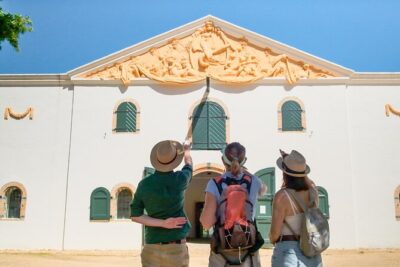
Constantia Wine Walk Storytelling Vineyard Tour with Lunch
Our review →
Etna Urban Winery – Sunset vineyard Walk and Tasting Dinner
Our review →
Etna Urban Winery, Vineyard Walk & Sunset Tasting Dinner
Our review →
Gourmet walk in the heart of the vineyards with Champagne tasting near Epernay
Our review →
Every list this estate visit appears in