
REVIEW · FRANCE
Wine Getaway with Tasting in the Chablis Vineyard
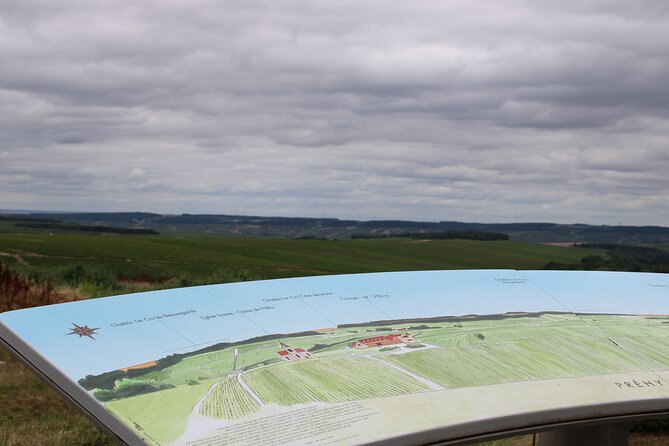
Chablis tastes better when you see where it grows. This compact vineyard outing pairs a minibus tour through Burgundy, Petit Chablis, Chablis, and Chablis Premier Cru parcels with tastings taken right at the source. I especially like the plot-by-plot tasting and the small group size, capped at seven people. The main catch is that the tour depends on good weather and at least two participants.
For about $108.84 per person, you get roughly two hours of guided wine education, vineyard touring, and five tastings. I also like that guides such as Aija, Fanny, and Frédérique are praised for making the technical side friendly and easy to follow. Just remember that this is an introduction, not a full-day wine route.
Key points about this Chablis vineyard outing
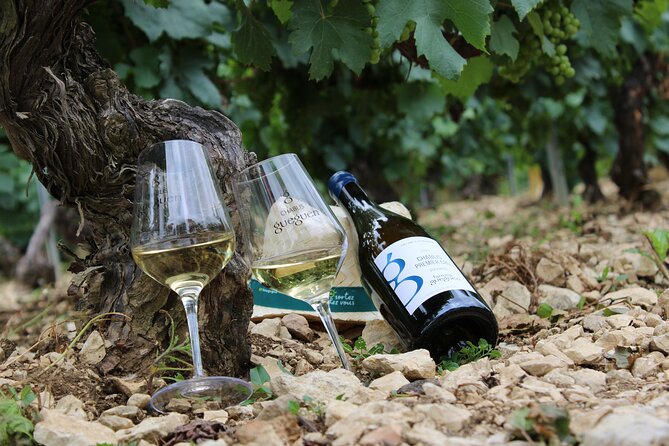
- Taste wine beside its own vineyard parcel: The tasting is linked to the exact plot you have just visited.
- Compare four Chablis appellations: The route covers Burgundy, Petit Chablis, Chablis, and Chablis Premier Cru.
- Learn why the soil matters: The guide explains geology, slope, exposure, pruning, harvest work, and how each parcel affects the wine.
- Travel in a group of no more than seven: The small minibus setting should allow room for questions and conversation.
- Sample five different wines: Food and wine pairings are included in the explanation.
- Plan around weather and demand: The outing may be canceled for poor weather or if fewer than two people book.
Why tasting Chablis in the vineyard matters
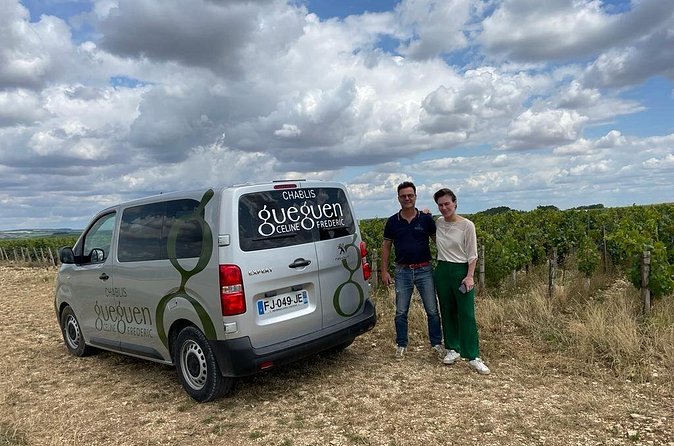
Chablis can look simple on a wine list: one famous French region, mainly known for crisp white wine. The point of this experience is to show you that Chablis is not one uniform place. The soil, slope, exposure, and official appellation all help shape what ends up in your glass.
That lesson is much easier to grasp when you are standing in the vineyard rather than sitting at a tasting counter. You first see the parcel, then hear about its geological character, and then taste the wine made from that setting. I like this order because it gives the wine a sense of place before you have to think about aromas or food pairings.
The outing also covers more than the final bottle. The guide may explain vine pruning, winter work, harvest tasks, and the effect of different plots. This makes the activity useful for someone who wants to understand how wine is made, not simply drink several samples.
You should not expect a technical wine certification class. In two hours, the guide can give you a clear framework, but not every detail of Burgundy viticulture. That short format is part of the appeal for a visitor with limited time, though serious wine students may wish for a longer visit.
A few more vineyard visits around France worth a look
- Saint-Émilion: Grand Cru Classé Winery Visit and Tasting
★ 4.6 · 1,118 reviews - Saint Emilion Half-Day Trip with Wine Tasting & Winery Visit from Bordeaux
★ 4.5 · 1,034 reviews - Saint-Émilion: Bordeaux Vineyard Tour and Wine Tasting
★ 4.8 · 578 reviews
Starting at 5 Bis Rue Jules Rathier in Chablis
The meeting point is 5 Bis Rue Jules Rathier, 89800 Chablis, France. You return there at the end, so you do not need to arrange a second pickup point or figure out a one-way transfer.
The minibus is important. Instead of trying to walk between separate vineyard parcels, you are driven through the Chablisian wine country. The route lets the guide connect several appellations within a short period, which would be difficult on foot during a two-hour activity.
Give yourself enough time to locate the meeting point before the scheduled start. The supplied details do not state a hotel pickup service, parking arrangement, or public transport advice, so you should not assume the minibus will collect you elsewhere.
The tour is offered in English. Since the guides are described as friendly and enthusiastic about explaining the region, the experience should suit English-speaking visitors who want more than a quick cellar tasting.
Comparing Burgundy, Petit Chablis, Chablis, and Premier Cru
The central idea is comparison. You visit different parcels associated with Burgundy, Petit Chablis, Chablis, and Chablis Premier Cru, then taste wines connected to those places.
The Burgundy and Petit Chablis stops help set the lower end of the regional ladder. They give you a reference point for understanding how appellation levels relate to vineyard location and production. The activity is not simply saying that one label is better than another. It links the name on the bottle to the actual ground beneath the vines.
The Chablis parcels then bring you closer to the area’s best-known identity. You can ask how the soil, position, and exposure affect the finished wine, and the guide can explain why two bottles from nearby plots may not taste exactly alike.
The Premier Cru stop provides another point of comparison. The value here is not just tasting a more prestigious label. You get to look at the parcel and hear why its position or geology matters, then test that explanation in the glass.
The information provided does not promise a stop at every vineyard named by a specific producer, nor does it list the exact order of the parcels. Conditions and the day’s route may shape the sequence. Think of it as a guided comparison across appellations rather than a fixed checklist of named vineyards.
Five wines tasted beside the vines
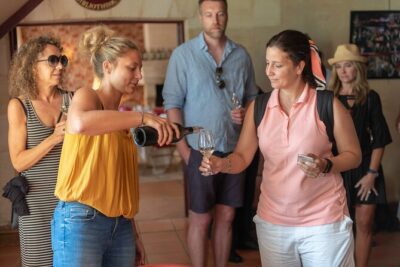
The tasting includes five different wines. That is a good number for a two-hour activity: enough to compare styles, but not so many that the tasting becomes a race through small glasses.
The unusual feature is the setting. You taste the wine at the plot where it was produced, rather than waiting until the end and trying to remember several stops at once. I find that kind of arrangement far more useful for a first visit because the soil and terrain are still in front of you.
The guide also discusses food and wine combinations. This gives you a practical way to remember the wines after the outing. Instead of hearing only technical terms, you can connect each sample to the kinds of food it might accompany.
Alcoholic drinks are available only to people over 18. The information does not specify a separate nonalcoholic tasting option, so if that matters to you, ask the provider before booking. You should also pace yourself, especially if you have plans to drive afterward.
The tasting should be treated as guided education rather than a chance to consume large quantities. The appeal lies in the explanation and comparison, not in the volume served.
Same place, a completely different cellar door:
- Bordeaux: Vineyards Wine Tasting Half-Day Trip
★ 4.2 · 470 reviews - Half-Day Wine tour across Bordeaux’s Vineyards
★ 3.5 · 429 reviews - Saint-Émilion: Vineyard Walking Tour and Tasting
★ 5.0 · 404 reviews - Small-Group Full-Day Tour of Côte de Nuits, Côte de Beaune Vineyards and Beaune Historical District
★ 5.0 · 364 reviews
Guides who explain the ground under your feet
The guides named in the supplied material are Aija, Fanny, and Frédérique. The strongest praise centers on their ability to explain the vineyard in a warm, approachable way.
Aija is associated with a discovery walk and an informative, friendly introduction to the Chablisian vineyard. Frédérique is praised for guiding the group smoothly through the different plots. Fanny is described as enthusiastic about explaining the local vineyard and its character.
The subject matter can become dense quickly. Terms such as geology, exposure, pruning, and appellation may sound dry if they are presented as a lecture. The value of this experience depends heavily on the guide turning those ideas into things you can see around you.
The available feedback points to that happening well. You should feel free to ask questions while moving between parcels, particularly if a wine tastes different from the one before it. With a maximum of seven people, the setting should be more personal than a large coach tour, although the exact group size depends on bookings.
What the geology lesson adds to the tasting
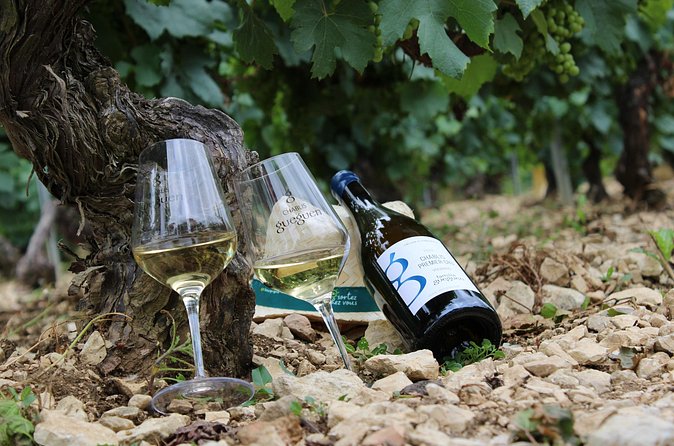
The geological explanation is not decorative background. It is the reason the tour can offer more than a scenic drive through vineyards.
At each parcel, the guide explains the particular geological character of the place. You then taste a wine made from grapes grown there. That sequence gives you a concrete way to think about the relationship between soil and flavor.
The activity also addresses slope and exposure. These details help explain why vineyards are planted in particular positions and why different parcels can produce different results. You may not remember every geological term, but you should come away with a better sense of why the location printed on a wine label matters.
Seasonal vineyard work is part of the discussion too. Winter pruning and harvest work show that wine production continues long after the grapes have been picked. This is one of the more useful parts for a first-time visitor because it removes the idea that vineyards simply grow untouched until harvest.
The precise balance between walking and riding is not stated. One description refers to a discovery walk, while the overall activity uses a minibus to reach several areas. Wear sensible shoes and expect some time outside, but do not assume a long hike.
Two hours that fit a short stay
A duration of about two hours makes this a practical choice if you are passing through Chablis or building a larger Burgundy itinerary. You can learn the basics without giving up half a day.
The compact length also keeps the activity focused. The route can move through several appellations, explain their differences, and include five wines without stretching into an exhausting program.
The tradeoff is depth. You will not have unlimited time at every parcel, and the guide cannot cover every producer, vintage, or winemaking technique. If you want a long lunch, several cellar visits, or an extended walk, this outing will feel too brief.
I would use it as an orientation. Afterward, you will have a better idea of which appellation interests you and which questions to ask at another winery. It works particularly well early in a Chablis visit, when you want context before buying bottles or arranging longer tastings.
The activity is booked, on average, about 96 days ahead. That does not guarantee that every date sells out, but it is a useful warning not to leave it until the last minute if your plans are fixed.
Is $108.84 a fair price?
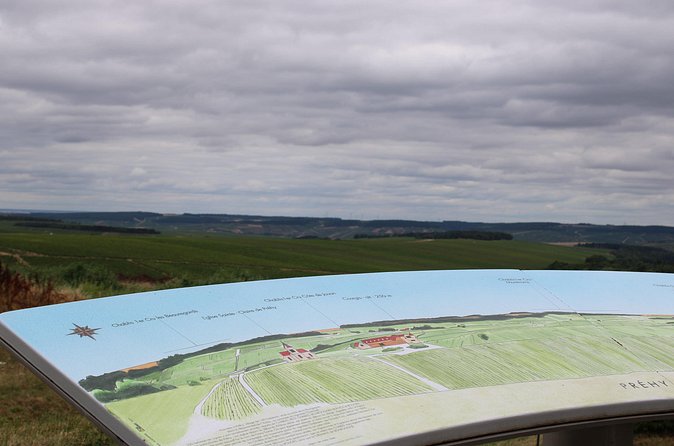
At $108.84 per person, this is not a cheap tasting-room stop. The price needs to be judged against what is included: minibus transport between vineyard parcels, a guided explanation of several appellations, a walk or outdoor viewing component, and five wines tasted in connection with their place of origin.
I consider that reasonable for someone who values context. You are paying for access to multiple plots within a short time, plus the guide’s explanations. The small maximum group of seven also adds value, since a guide can usually respond to individual questions more easily than on a large coach outing.
The cost may feel high if your main goal is simply to sample Chablis wine. A local shop or cellar might offer a less expensive tasting, although it would not provide the same direct link between bottle and vineyard parcel.
The best value comes when you pay attention. If you treat it as five unrelated pours, the price will seem steep. If you use the geology, appellation, and food pairing discussion to understand what you are tasting, the outing gives you a practical foundation for the rest of your time in Burgundy.
Weather, minimum numbers, and other practical limits
The experience requires good weather. If conditions are poor, you can be offered another date or a full refund. This is sensible for an activity that includes time in vineyard parcels, but it means you should avoid placing it on the only free hour of a tightly packed itinerary.
At least two people are required for the outing to operate. If the minimum is not met, you can be offered another activity or a refund. That policy protects you from arriving for a tour that cannot run, but it also means your booking is not an absolute guarantee until confirmation is received.
Confirmation is sent within 48 hours of booking, subject to availability. Plan accordingly if you are booking close to your departure date.
The group maximum is seven people. Service animals are allowed, and most people can participate. The available information does not give details about wheelchair access, vehicle storage, or the amount of walking, so ask the provider directly if you have mobility needs beyond the general statement that most people can join.
Free cancellation is available up to 24 hours before the start time for a full refund. Cancellations or changes made less than 24 hours in advance are not accepted for a refund. Cutoff times follow local time in France.
Who will enjoy this Chablis experience?
I would recommend it to you if you want to understand why Chablis wines differ, but you do not want a full day of wine visits. It also suits couples and small groups who prefer a quieter outing with time for questions.
It is a strong choice for a first visit to Chablis. The comparison between Burgundy, Petit Chablis, Chablis, and Premier Cru gives you a useful map of the local wine structure, while the tasting keeps the information grounded in something you can actually experience.
Food lovers should appreciate the pairing discussion. Even if you are not deeply interested in geology, the practical advice about matching wine with food gives the tasting a useful purpose.
This may not suit you if you dislike outdoor activities, need a guaranteed departure in poor weather, or want a broad tour of many wineries. The route is built around the vineyards and the producer’s explanation, not around a large selection of unrelated tasting rooms.
It is also not a good fit for anyone under 18 who wants to take part in the alcohol tasting. Only people over 18 may consume alcoholic beverages.
Should you book the Chablis vineyard tasting?
I would book this experience if you want a clear, compact lesson in how place shapes wine. The strongest reason to go is the chance to taste five wines beside the parcels where they were produced, while a guide explains geology, slope, exposure, and vineyard work.
Book it early if your schedule is fixed, since it is often reserved well ahead. Leave a little flexibility for weather, and confirm any mobility or transport questions before paying.
Skip it if you want a long vineyard walk, a full-day winery circuit, or the lowest possible tasting price. For most people spending a short time in Chablis, though, the combination of small-group transport, five wines, and plot-by-plot explanation offers a useful and memorable introduction.
FAQ
How long does the Chablis vineyard experience last?
The activity lasts approximately two hours.
Where does the experience begin?
It begins at 5 Bis Rue Jules Rathier, 89800 Chablis, France.
Where does the experience end?
The activity ends back at the meeting point.
How many wines are included?
The experience includes a tasting of five different wines.
Which vineyard appellations are covered?
The route visits parcels associated with Burgundy, Petit Chablis, Chablis, and Chablis Premier Cru.
Is the experience offered in English?
Yes. The experience is offered in English.
How large can the group be?
The activity has a maximum of seven participants.
What happens if bad weather cancels the experience?
You will be offered a different date or a full refund if poor weather causes the cancellation.
Can I cancel for a full refund?
Yes. You can cancel at least 24 hours before the start time for a full refund. Cancellations or changes made less than 24 hours before the start time are not accepted for a refund.
Just added around France
- Vineyard of the Alpilles by bike★ 4.6 · 8 reviews
- Vosne-Romanée: Private Vineyards Walking Tour with Tasting★ 4.4 · 9 reviews
- Vineyard tour and wine tasting in Davron★ 4.5 · 7 reviews
- Private Vineyard Tour and Wine Tasting in Bandol★ 5.0 · 16 reviews
- Vineyard visit in Gyropode, visit of Cave & Tasting Wines of Bandol★ 5.0 · 19 reviews
- Bike ride on the Wine Route from Sélestat★ 5.0 · 5 reviews
- Horse riding in the vineyards of Grimaud + wine tasting★ 5.0 · 3 reviews
- 1/2 day private Vintage tour, vineyards of Saint-Tropez★ 5.0 · 6 reviews
France Vineyard Tours, compared.
Saint-Émilion: Grand Cru Classé Winery Visit and Tasting
Our review →
Saint Emilion Half-Day Trip with Wine Tasting & Winery Visit from Bordeaux
Our review →
Saint-Émilion: Bordeaux Vineyard Tour and Wine Tasting
Our review →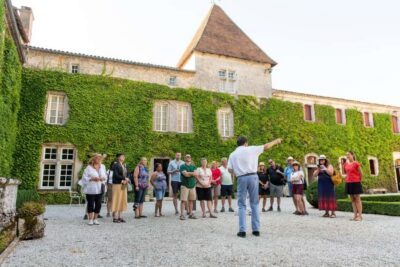
Small-Group Full-Day Tour of Côte de Nuits, Côte de Beaune Vineyards and Beaune Historical District
Our review →
Every list this estate visit appears in