
REVIEW · FRANCE
Riquewihr: the pearl of the vineyards with a local guide and tastings
Riquewihr rewards a slower look. This 90-minute guided walk goes past postcard facades to explain the village’s fortified gates, noble houses, symbols, prisons, witch legends, and long connection with wine. I like the way it treats stone and wood as historical clues, and I like the tasting of Riquewihr macarons and other local specialties. The main drawback is the language: the tour is in French, and the detailed description also refers to a two-hour visit, so you should confirm the exact length when booking.
Starting at Place Fernand Zeyer, the walk returns to the same spot and keeps you in Riquewihr’s old center. It suits curious adults and children who enjoy stories, though uneven walking and the town’s historic streets make it unsuitable for people with mobility impairments. Guide Géraldine received warm praise for linking local history with Europe’s wider past, Christmas traditions, and sweet and savory tastings.
Key points to know before you book
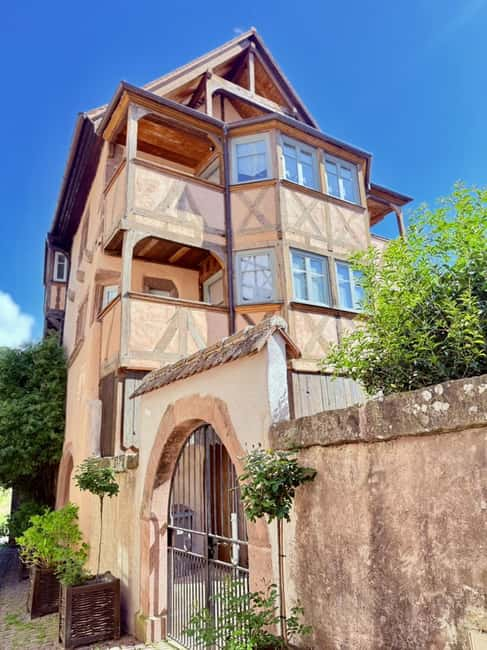
- Look beyond the pretty facades: Learn how walls, timber, dates, coats of arms, and carved symbols reveal the village’s past.
- Meet medieval Riquewihr: Fortified gates, the thieves’ tower, and former prisons show a town shaped by trade, defense, and strict justice.
- Hear the darker stories: Alsatian witch trials connect local legends with real fear, accusations, and punishment.
- Taste a local specialty: Riquewihr macarons are included, along with local products described as both sweet and savory.
- Follow a French-speaking guide: Géraldine’s tour has been praised for its detail, warmth, and sense of occasion.
- Plan for a walking tour: Wear comfortable shoes, and expect the activity to run even in rainy weather.
Why Riquewihr needs more than a quick photograph
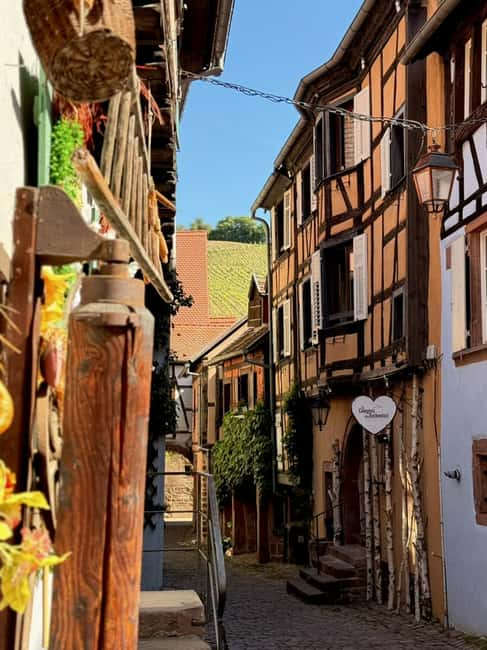
Riquewihr is easy to admire from the outside. Its colorful facades, flower-filled balconies, and narrow streets give it the look of a storybook village. That beauty can also work against it. You may spend half an hour photographing a house and miss the reasons it looks that way.
This tour is designed to slow you down. Instead of treating Riquewihr as a pretty stop between vineyards, it explains how the village worked as a fortified town, a market center, and a wine-producing community. Those roles shaped the buildings you see today.
I especially like the focus on reading the old structures. A date carved into timber, a coat of arms above a doorway, or a repeated protective sign can seem decorative at first. With a guide, those details become clues about owners, beliefs, wealth, danger, and local customs.
The walk is also appealing because it does not stick to a single polished version of the past. Along with merchant families and wine, you hear about imprisonment, punishment, fear, superstition, and women accused of witchcraft. That gives the village sharper edges. Fairy tales are pleasant, but real history is usually stranger.
More guided visits around France:
- Saint-Emilion: Grand Cru Classé Guided Winery Visit & Picnic
★ 4.7 · 296 reviews - Alsace Wine Route Wineries & Tasting Small Group Guided Tour from Strasbourg
★ 5.0 · 229 reviews - Small Group Guided E-bike Tour in Nice’s Organic Vineyard
★ 5.0 · 220 reviews
Meeting at Place Fernand Zeyer
The tour begins and ends at Place Fernand Zeyer, making the meeting point simple to understand. You do not need to arrange transport between stops, and the circular format is useful if you are fitting the walk into a larger day in Riquewihr.
The opening matters. A good guide can help you place the village in context before pointing out individual houses. Here, the focus is on the layers beneath the charming surface. You are introduced to Riquewihr as a place with military, commercial, and wine-growing importance, not only as a photogenic Alsatian village.
The supplied timing needs a little care. The activity is presented as lasting 90 minutes, while the detailed tour description refers to two hours in several places. I would allow at least two hours in your schedule so you are not rushing to another booking, then confirm the start time and expected length before you go.
The guide speaks French, and some content is presented in its original language. If you do not understand French well, this is an important consideration. The value of the tour depends heavily on following stories, explanations, and wordplay, not simply walking from one building to another.
Fortified gates and the town’s strategic past
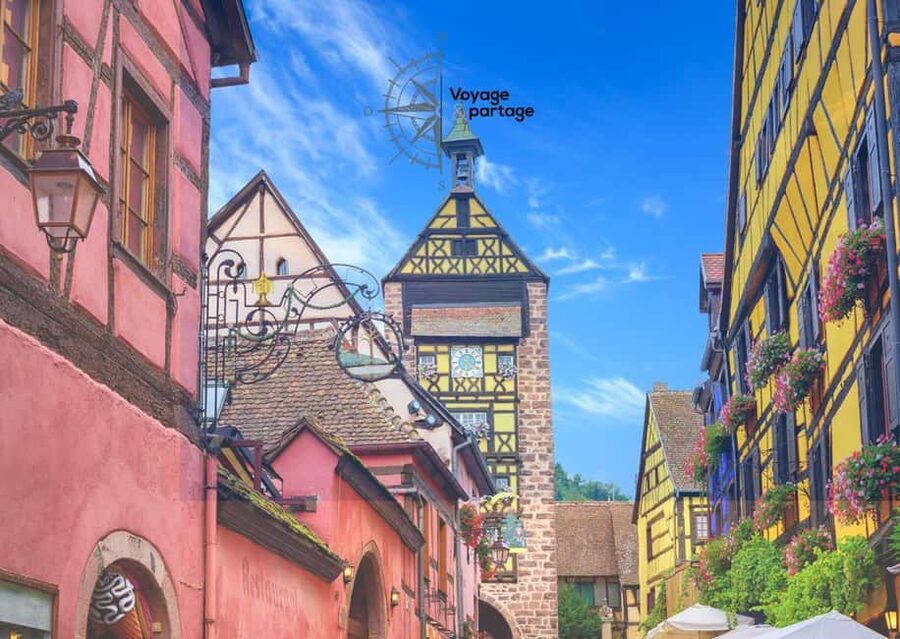
Early in the walk, the old walls and fortified gates set the tone. These structures show that Riquewihr was once concerned with more than appearance. Its position and trade connections made defense important, and the village had to control movement through its entrances.
I find this part useful because walls can otherwise become background scenery. A guide gives them a job to perform. You begin to see gates as tools for protecting property, managing access, and marking the edge between the town and the outside world.
The tour connects this defensive role with trade. Riquewihr was not only a settlement behind walls. It also served as a market town and a wine center, so protection and commerce were closely linked. Merchants needed safe streets and secure buildings, while the town benefited from the movement of goods.
The drawback is that this is a walking tour through an old town, not a museum visit with seats and long pauses. If you have difficulty standing or walking on historic surfaces, the activity may be tiring. Comfortable shoes are specifically recommended, and that advice should be taken seriously.
Noble houses that reveal ambition
Riquewihr’s 16th-century houses form one of the most interesting parts of the route. Their decoration can include frescoes, coats of arms, mottos, and carved details. You may see these features as visual treats, but the guide helps explain what they were meant to communicate.
Large, decorated houses could display a family’s social position and commercial success. A coat of arms might identify a household or its aspirations. A motto could express religious beliefs, family values, or a warning about how the owners wished to be viewed.
This is where the promise to read stone and wood like history books becomes practical. Look closely at the upper floors, doorways, beams, and surfaces around windows. The key is not to assume every mark has one obvious meaning. Instead, you learn to ask who built the house, why it was decorated, and what message it sent to people passing by.
I like this approach because it gives you a skill to use after the tour. Even if you return to Riquewihr later without a guide, you will have a better eye for dates, signs, motifs, and changes in building style.
A few more vineyard visits around France worth a look
- Saint-Émilion: Grand Cru Classé Winery Visit and Tasting
★ 4.6 · 1,118 reviews - Saint Emilion Half-Day Trip with Wine Tasting & Winery Visit from Bordeaux
★ 4.5 · 1,034 reviews - Saint-Émilion: Bordeaux Vineyard Tour and Wine Tasting
★ 4.8 · 578 reviews - Bordeaux: Vineyards Wine Tasting Half-Day Trip
★ 4.2 · 470 reviews
Symbols, signs, and small clues
The tour highlights protective crosses, coded motifs, dates, and other signs found around the village. These details create a quieter kind of sightseeing. You are not simply moving toward the next famous building. You are looking for small marks that connect ordinary streets with older beliefs.
Some symbols relate to protection. Others may point to ownership, faith, trade, or a particular moment in a family’s history. The experience is strongest when you let the guide explain the possible links between the visible sign and the local story attached to it.
This part should appeal to families. Children often enjoy the idea of searching for clues, and the tour is specifically described as suitable for them. The darker subjects, especially punishment and witch accusations, may require a little parental judgment, but they also show that the past was not always gentle.
Because the guide speaks French, the amount of detail you take away will depend on your language ability. If you understand only basic French, you may still enjoy the visuals and tastings, but you will miss some of the connections that make these signs meaningful.
The thieves’ tower and old prisons
Riquewihr’s thieves’ tower and former prisons bring medieval justice into the walk. This is the point where the town’s neat facades meet its harsher side.
The guide explains how justice worked, including exemplary punishments and the fears shared by the wider community. Such places help you imagine a society where law, reputation, religion, and public punishment were tightly connected.
I appreciate that this subject is included rather than avoided. It reminds you that historic villages were lived-in places with conflict and crime, not stage sets preserved for modern photographs. The old prison spaces also give a physical focus to stories that might otherwise feel abstract.
Do not expect a large prison museum or an extended interior visit based on the information provided. The tower and prisons are part of the guided walking route, with the guide supplying the context and stories. Their value comes from the explanation, so stay close and listen carefully.
Witches, legends, and uncomfortable truths
The stories of Alsatian witches add a darker thread to the tour. You learn how certain women were accused, tried, and sometimes burned during periods when superstition influenced the law.
The interesting question is where legend ends and documented events begin. Riquewihr’s stories are not presented only as spooky entertainment. They are linked to real accusations, trials, and social fears. That connection gives the subject weight.
This section may be especially memorable because it changes the mood of the walk. One moment you are admiring carved timber and merchant houses. The next, you are considering how quickly rumor could become a legal charge, and how vulnerable accused women were.
Families should decide in advance if this material is right for younger children. The activity is advertised as suitable for children, but the subject includes executions and persecution. Older children who enjoy history may find it gripping, while very young children may prefer the architecture and food portions of the tour.
Secret passages and quiet courtyards
The route also seeks out a less public side of Riquewihr, including secret passages, inner courtyards, and forgotten alleyways. These spaces matter because the grand streets tell only part of the story.
A main street shows how a town wanted to be seen. A courtyard or narrow passage can reveal how people actually moved through the settlement, stored goods, shared space, or kept private life away from public view. You may find that these quieter corners are more atmospheric than the famous facades.
The description does not promise access to every private space, so you should not expect a tour of normally closed homes. The wording suggests a guided look at discreet corners within the village. Still, this focus adds variety and helps you get away from a simple front-door-to-front-door sightseeing routine.
For me, this is one of the strongest reasons to choose a guide instead of walking alone with a map. You might pass an alley without noticing it. A local guide can point out why it matters and connect it to stories about daily life.
Wine culture and the village economy
Wine is not a side note here. It helped shape Riquewihr’s economy, architecture, and reputation over many centuries.
The tour explains how wine-growing affected the village as a place of work and trade. This context helps you understand why the town developed as it did, and why wine remains part of its public identity. The vineyards outside the walls and the buildings inside them belong to the same story.
You should not expect a vineyard excursion or a full cellar tour from the information available. This is a historical walking experience in Riquewihr, with wine culture explained as part of the village’s past and present.
That focus is useful if you are seeing several Alsatian wine towns. Instead of treating each one as interchangeable, you begin to notice how trade, architecture, family wealth, and local reputation connect. Even without a major wine tasting, you gain a clearer sense of why wine matters here.
Macarons and local products at the end
The tasting gives the walk a friendly finish. Riquewihr macarons are specifically included, and the experience also refers to local sweet and savory specialties.
The macarons are not just a sugar stop. They tie the tour to local food culture and give you a chance to share a simple regional treat after a lot of historical information. One review of the experience gave particular praise to the mix of sweet and savory tastings, so you should expect the food element to be more than a token sample, although the exact products are not specified.
I like this balance. A history walk can become a lot of names, dates, and grim stories in a short time. A tasting gives you a pause and a sensory reminder of the place.
Do not book this as a food tour, however. The main focus is history, buildings, legends, and wine culture. The tasting is an appealing addition rather than the central reason to go.
Is $41 a fair price?
At $41 per person, the value depends on how much use you will make of the guide. You are paying for a local French-speaking guide, a structured walk, historical interpretation, and included tasting. You also receive tips and vouchers for your stay, though the exact form and value of those extras are not explained.
For a short visit, I consider the price reasonable if you enjoy guided history and want more than photographs. A self-guided walk costs less, but it will not necessarily reveal the meaning behind symbols, local legends, prisons, or decorated merchant houses.
The price is less attractive if you speak little French, dislike walking, or mainly want free time to browse shops and take pictures. In that case, you may not get enough from the explanations to justify the cost.
The high rating of 4.7 from three verified bookings points to a well-received experience, though the sample is small. The strongest praise centers on detail, a pleasant atmosphere, and Géraldine’s ability to connect Riquewihr with wider European history and Christmas traditions. One short review simply called it a beautiful visit with many details, which captures the tour’s main strength.
Practical details for a smoother visit
Meet at Place Fernand Zeyer and return there at the end. Wear comfortable shoes, since the experience is a walking tour through an old village.
The tour runs in rainy weather, so bring suitable clothing rather than assuming poor weather will cancel it. The information provided does not state group size, interior access, transport arrangements, or the exact tasting portions, so do not plan around those details.
Free cancellation is available up to 24 hours before the activity for a full refund. You can also reserve and pay later, which helps if your Alsace plans are still shifting.
The activity is not suitable for people with mobility impairments. That is worth treating as a firm warning, not a minor footnote. Historic streets and a continuous walking route can be demanding.
Who should book this Riquewihr walk?
I would choose this tour if you want to understand what you are seeing, not simply collect pretty village photographs. It is a good fit for history lovers, families with older children, visitors interested in local legends, and anyone curious about how wine shaped a town.
It also suits you if you enjoy small details. The best moments are likely to come from symbols, dates, courtyards, old walls, and stories that are easy to miss on your own.
I would look elsewhere if you need an English-language tour, have limited walking ability, or want a substantial wine tasting. The French-only format is the clearest limitation, and the mismatch between the advertised 90 minutes and the repeated two-hour description deserves a quick check before booking.
Final verdict: book for stories, not just scenery
Book this experience if you want Riquewihr to feel like a lived-in place rather than a pretty backdrop. The combination of fortified walls, merchant houses, prison stories, witch trials, quiet passages, wine culture, and macarons gives the village more depth than a quick stroll can provide.
I would especially consider it during a first visit, when a guide can help you get oriented and notice details you would otherwise miss. Just confirm the duration, make sure French works for you, and wear shoes built for walking. At $41, it offers solid value for a detailed, personal introduction to Riquewihr, provided history matters more to you than a long food or wine tasting.
FAQ
Where does the Riquewihr tour start?
The tour starts at Place Fernand Zeyer.
Where does the tour finish?
The walking tour returns to Place Fernand Zeyer.
How long does the activity last?
The activity information gives a duration of 90 minutes. The detailed description also refers to a two-hour visit, so confirm the exact duration when booking.
What language is the tour conducted in?
The live guide speaks French. Some content is shown in its original language.
Are tastings included?
Yes. The experience includes a tasting of Riquewihr macarons, and the tour description also refers to local sweet and savory products.
Is the tour suitable for children?
Yes. The tour is described as suitable for children, although it includes darker subjects such as imprisonment, punishment, and witch trials.
What happens if it rains?
The tour takes place in rainy weather, so wear suitable clothing and comfortable shoes.
Just added around France
- Vineyard of the Alpilles by bike★ 4.6 · 8 reviews
- Vosne-Romanée: Private Vineyards Walking Tour with Tasting★ 4.4 · 9 reviews
- Vineyard tour and wine tasting in Davron★ 4.5 · 7 reviews
- Private Vineyard Tour and Wine Tasting in Bandol★ 5.0 · 16 reviews
- Vineyard visit in Gyropode, visit of Cave & Tasting Wines of Bandol★ 5.0 · 19 reviews
- Bike ride on the Wine Route from Sélestat★ 5.0 · 5 reviews
- Horse riding in the vineyards of Grimaud + wine tasting★ 5.0 · 3 reviews
- 1/2 day private Vintage tour, vineyards of Saint-Tropez★ 5.0 · 6 reviews
Guided, compared.
Private Self-Guided E-Bike Ride in Tuscany with Vineyard Visit
Our review →
Malibu: Guided Vineyard Hike with Photo Stops and Wine
Our review →
Saint-Emilion: Grand Cru Classé Guided Winery Visit & Picnic
Our review →
Alsace Wine Route Wineries & Tasting Small Group Guided Tour from Strasbourg
Our review →
Small Group Guided E-bike Tour in Nice’s Organic Vineyard
Our review →
Manilva: Nilva Vineyard, Wine Tasting & Tapas Guided Tour
Our review →
Every list this estate visit appears in